
What’s Your Policy on ‘Bad Language’?
When I was little, I thought that “vulgar” was a language — spoken, I presumed, in the country of Vulgaria. I imagined it as a nation full of rude and unkind people who chewed gum with their mouths open and said “butt” instead of “bottom.” This was all because of my dad, who was comically polite. To him, drinking from a straw was inappropriate (“They’re meant to be used in hospitals”), and children were always “children,” never “kids.” Drop a casual “heck” and he’d look almost wounded. “Let’s not be vulgar, Kels.”
By age four, I’d figured out both the real meaning of “vulgar” and the fact that my dad was ridiculous. I spent decades ruffling his feathers with the mildest slang: “snot,” “spit,” or — egads! — “puke.” I, of course, would have no such hang-ups as a parent. I’d be principled about language, not stuffy. As long as it wasn’t hateful or harmful, who really cared? Then came the day my own four-year-old said “snot,” and some fussy, paternal gene was activated in me: “It’s called ‘mucus!’”
My daughter is now six, and we’re still ironing out our policies on language. The central tenet is the same: nothing hateful or harmful, which includes words rooted in ableism, like “dumb” or “crazy.” Sure, it gets tricky, explaining why we don’t say “crazy” when lots of our friends do — or why we listen to Hamilton, but we don’t walk around calling people “bastard, orphan, son of a whore” (and also there’s nothing wrong with being any of those things). Whew, it’s a lot, but that’s the kind of tricky I can handle.
What I’m completely lost on is good, old-fashioned swearing and slang. I don’t really have a good, principle-backed reason for not wanting to let my daughter drop f-bombs (we’re not there yet, but I’m sure the day is coming). I just tell her there are some words she might choose to use when she’s older — y’know, Alexander Hamilton’s age. (That’s pretty good? Right?) I correct her “oh my god” to “oh my gosh,” with a slightly wobblier explanation about “god” meaning different things to different people, and then trail off into something about respect for beliefs. (???)
As for calling it “mucus” instead of “snot,” I have no excuse. That’s just straight-up fussiness I inherited, along with my dad’s nose. One day, she’ll turn around, tell me I’m ridiculous, and crack her gum right in my face — and I’ll have earned it. That’s fine. But in two months, she’ll start first grade. We’re talking real school, with homework and lice and all sorts of other big-kid stuff she’ll bring home, including big-kid words and, surely, the desire to ruffle her mom’s feathers with them. I need a strategy, and quick. (Quick_ly_, that is.)
So, if I may ask: What’s your policy on ‘bad language?’ If you’re a parent, do you allow it at home? Do you have different rules for different crowds or age groups? Are certain words off-limits, period?
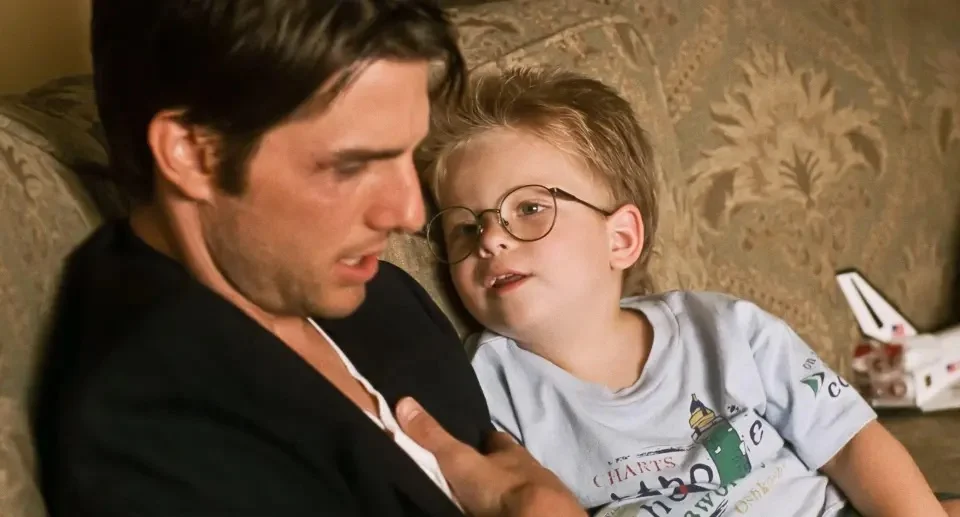
Jerry Maguire #jerrymaguire #1996 #tomcruise #jonathanlipnicki #talk #zoo #really
P.S. More posts on talking to kids, including talking to kids about sex, periods, death, consent, and feelings.
Comments
107 commentsThese comments are so interesting because they highlight, yet again, that there are so many ways to think about something. Some people don’t think curse words are a big deal — they’re just words; others attach more weight to them precisely because they’ve always had weight in society. Some people don’t believe in applying filters in any setting (why should I regulate myself on behalf of others’ feelings?), while others think it’s important to read the room. Posts like this always make me go down a big mental spiral about different viewpoints and respecting others. How DO we respect each others differences when the differences are sometimes completely contradictory? Or are there times when we believe we SHOULDN’T respect each others differences? And most things need our judgment at some point — how do you withhold judgment but also form your own opinion about something? So many questions that plague me! Any thoughts?
Late to the game, but wanted to chime in! In our house, we use the term “knife words.” Just like knives, some words are sharper than others. And, just like we don’t let babies wave knives around, we don’t let babies/kids/people use sharp words with wild abandon. My kids know the word f#ck, and they’re allowed to use it around me…just like they’re allowed to use a sharp knife around me. At school?? Definitely not! But, they’re not allowed to use sharp knives at school, either. [it’s not a perfect rule, but it’s worked so far!] The lesson I’m trying to give them is that control is far more important than the actual word. You have to know where and when to use it. If you understand that and can control yourself, then there aren’t “bad” words. Words in and of themselves have no moral value. You do have to realize, though, that some words are shaper than others.
I love this concept and explained it in a similar way to my 7.5 year old. I said, although I don’t care, I prefer that she drop f-bombs in moments when she means it. Not towards people, but when you stub a toe really hard, or a car cuts you off when you’re walking. I love the idea of ‘knife words’.
This is amazing and is, I feel, exactly what this world needs more of right now. Thank you for being a light!!
Love this question. I got a tip from someone that worked well for us as far as cussing/swear words. We would tell the kids that they could say those words when they were older and understood when was the right time or wrong time to use them. In the mean time they were allowed to say any word or ask about any word with us if they were curious, or just wanted to try it out. This usually happened at dinner. One of the kids would say, “mom, can I say a cuss word,” and I’d “say sure, which one?” And they’d usually say damn or shit. It was adorable. They sometimes asked what a word meant or if it was a bad word and it was really helpful for all involved.
My parent had a two pronged approach to curb swearing that were effective! Approach 1: “You are so smart, surely you can think of a more compelling word than that.” Approach 2: If you do not often swear, when you do let one out people will take notice far more. I can confirm approach #2 is especially effective because 35 years ago my mom called my brother a “little shit” when she didn’t know I was in ear shot and it remains the greatest moment of my life.
I love this question because I actually do have a policy on swearing (which we say in Australia, not cursing) My policy, which I’ve told to my children, is you don’t swear up or down. You can swear in front of your own peers (if you want to) but you don’t swear in front of people older than you or younger than you. Or people who are above or below you (eg in a work sense)
I’m a hard no on words like fat, stupid and shut up. I also hate hate hate toilet words! (I live in Australia but I’m Canadian and a little more buttoned-up than they are, yet I love the word f**k!) My four and six year old children don’t say the harsher words yet, they’ve tested the waters as pre-schoolers and I’ve told them once they start contributing to our mortgage they can say what they like. I am atheist but have a religious mother-in-law so I tell my children it’s oh-my-goodness or oh-my-gosh. Frankly though, I’d trade any of the toilet words and let them say f**k if it was socially acceptable.
We were very liberal with language use and exposure with our kiddo; who is now just weeks away from 13. We (tried) to teach context? Kids are SO GOOD at picking up on context clues. What’s appropriate vs inappropriate based on who’s in the conversation. At home words vs school words (especially now that he goes to catholic school). It takes nuance / discussion. And we don’t always get it right! There’s been a few embarrassing moments over the years (the toddler f bomb during thanksgiving prayer is quite memorable) and we’ve gotten one note home from a teacher. Looking back, we probably could’ve been a bit stricter with language and given him clearer guardrails so he didn’t have to navigate the nuance on his own…but I also think he learned a lot through that independence? Like so much of parenting, there’s not one right answer.
As someone who grew up in a family from a long line of folks with mental illness (and having dabbled in it myself) – please, please, do not believe any chronically online takes about the word “crazy” being ableist. You will have to wrench the word crazy and every single one of it’s variations out of my cold, dead hands. There is no other word to describe my family. Please.
I actually know many who people do — I think it’s such a personal thing!
It’s a completely personal choice, and many of my close friends (and relatives) with histories of mental illness feel the same way you do. For me, it’s a decision I came to after years of writing and researching issues of systemic bias. But I have another friend who wrote a whole book on her mental illness and the history of its treatment — and she once told me, “As someone who’s been institutionalized multiple times, I have no problem with ‘crazy.'” We all have different stances, for different reasons!
Probably others have chimed in from this perspective – I’ll add our “policy” as a very neurodivergent family. We pick our battles and swearing and cussing ain’t one of them!
YES! As a parent to a now-19-year-old neurodivergent trans son, swearing is just way down on the list. When we loosened that (sometimes double) standard, our relationship with our son improved dramatically.
We distinguish between *cursing* and *swearing*. Cursing is using words to harm, demean, or dehumanize someone. Swearing may use the same words but simply expresses frustration, surprise, or pain. The words matter less than the intention behind them. That said, some words—especially racist, homophobic, sexist, and other slurs—are inherently demeaning. They are always curses, not casual swear words. We also teach our kids that context matters. Different families/groups/cultures have different norms, and kindness often means paying attention to how your words affect the people around you. My husband’s family used words like *shit* and *ass* matter-of-factly (and often with a playful twinkle). My family would have been horrified by that kind of language. Our kids have learned to navigate both cultures without labeling either as right or wrong. Rather than giving rigid rules, we encourage them to ask: *What is my intention? How will these words affect the people around me?* Sometimes, in the right context, a well-placed swear word is exactly the right word. I have always loved this proverb from the Hebrew wisdom literature: “A word fitly spoken is like apples of gold in a setting of silver.”* Also, you need to abide by and respect the rules that are set in whatever context you are in (i.e. at school). Again, attunement, fittingness, discernment. One of our daughters is especially sensitive, so she keeps a “bad word journal.” When she hears a word she doesn’t know, she writes it down and asks us what it means. We respond in the journal, letting her satisfy her curiosity without having to say or hear the word repeatedly while helping her understand the world around her.
My husband and I decided early to encourage appropriate use rather than filter our vocabulary and my early-years policy was “if you can define it, you can use it. But that words have power and you need to understand what you’re saying” This was fun when my little was about 3 and sitting at the counter, exclaimed “What the HECK?!” (picked up from her Nana). “R”, I asked, “What does that mean?” Her face scrunched for a moment in thought, “Well, it’s like when you drop your bagel, and it lands face-down and you say ‘What the HECK!'” Fair enough. Approved for use. Fast forward to the tween years and the lines are a little more murky. She hears words in songs, from friends, from family. We laugh about how everything can be a swear word with the right emphasis (Looking at you, animated holiday films: “What the NUTMEG!”), but the foundation has been laid for necessary conversations about the root source of words, how they impact different people, when and where words are appropriate — all coming back to the foundation that words have power and one should speak with intention.
Though we are not particularly religious, I grew up in a religious household, where “Oh my God”‘s were unacceptable. My husband and I use “Oh my God” all the time, but I can’t help but wince if my daughter (7) uses it, and in fact, we don’t allow it, as it just doesn’t sound like something that should come from a child’s mouth — and I have nothing to back that up but a personal feeling. We don’t allow ‘stupid’ because it just sounds… I’m not sure. (My daughter must be so confused by our “logic.”) The common swears are not allowed, though instead of saying “you can’t say that” we say “you can choose to say that when you’re older and you really understand what it means.” She accepts that pretty well, for someone who rails against a “you can’t.”
The wincing from “oh my God” is inherently from being raised with the biblical commandment to not take the Lord’s name in vain. So if you aren’t currently practicing religion, why make your daughter adhere to this rule? If it’s only because you feel a certain way when she says it, that is a result of your own relationship to the word, not hers. “Stupid”, on the other hand, is a derogatory term meant to label someone as unintelligent (or something as not having meaning or matter). There is a clear distinction here that might help your daughter if she expresses confusion.
Guys! I love this post! I live in a very southern charming town where kids are expected to say yes m’am and no sir. I am from south of the border so to me this sounds so military and I feel that as long as my daughter say yes please and no thank you she is being polite. Thoughts ? Should I teach my daughter to take the southern ways so she isn’t labeled as disrespectful? I also don’t understand why kids can’t say butt and instead have to call it bottoms. That’s not their name and to me butt is just a diminutive of buttocks ?
So I moved to the south from Detroit as a teenager, never called anyone ma’am or sir, and was definitely thought of as rude. I hate to say it, but probably good to get her in the southern habit. You can of course explain the regionality of it, and how not everyone, everywhere, will expect this of her, but yeah, they are very stringent about social norms down there.
Kell, I disagree :) I don’t think a child should have to conform to societal norms of a region. If they aren’t from there, there is no reason to enforce this. If southern adults look down on it, they can keep their opinions to themselves! Not using “ma’am” or “sir” does not make a child disrespectful. I think that’s an antequated belief we should move away from.
Recently my 8 year old was searching for a song without the “E” and said to me “Mom, I can only find the Exquisite version”
This is so delightful!
We always told our kids they could use curse words IF it was funny.
I don’t swear in front of my 5-year old, but plan on teaching her (as my mum did with me) that it’s ok to swear if you really hurt yourself OR if it’s really, really funny!
In my house, we weren’t allowed to swear, but as I got older (40+ year old millennial here) I started to swear with gusto. At one of my first jobs, a very casual startup, I was known to be a sweary girl, and I loved it! Later, research came out saying that swearing was an indication of a higher IQ (which I am still suspicious of, but I digress). My son is now 11. He can swear, and he does at home/with us. Since he was a toddler, I’ve explained that we do not swear AT people, we do not use swearing to belittle people, and we don’t swear in certain situations or with certain people. I don’t want to get called in by his school for swearing; what a waste of time! And please, don’t swear in front of your grandparents or other people’s parents. Other than that, have at it! I don’t care. He’s really good at sticking to the rules, and so far, it’s worked out really well on my sample size of 1 (one).
We allowed: Dirtbag. And in teen yrs: dipshit
Like you, nothing hateful or harmful, but otherwise it’s all context. Most words are fine at home when not hurled at a person. I don’t want her saying the F-word to her teacher, and so we make it clear that some words are “at home” words and some words we are fine with would offend other people. But yeah, if you stub your toe, I pretty much don’t care what you scream.
My son came home from kindergarten one day and said, “Mom! Someone in class said the f-word today.” And I said, “Oh really? What was it?” He looked around and very seriously said, “Fug.” Now, of course, my husband and I love to say, “oh, fug” when something bad happens. My parents were very uptight (about a lot of things) growing up. I never felt like I could come to them for much of anything and always tiptoed around them and their feelings. I love that my kids feel like they can say bad words in front of me! To me, it’s a sign I’m doing something right (hopefully). Of course, we talk about context and kindness, etc. but I’m totally fine with it if my kids let one fly when they want to express some strong feelings.
Every year after school was done we had swear day where my son could use swear words as long as they were not directed at someone or made someone feel bad. Took the thrill out of it. He did use the f word lots later on in his teens but swearing isn’t the norm. He’s now 25
Thanks for the nostalgia with the screen shot. “Did you know the human brain weighs _twelve_ pounds”?
Hahaha, I just re-watched it two weeks ago, so it came to mind immediately when I was putting this post together.🥰
My kids aren’t allowed to use words if they don’t know the meaning. They can come to me or any trusted adult and ask the meaning. We talk about how certain words may hurt people and others may bother people when kids say them. They know that words matter and can cause harm. That’s the best I’ve got so far.
THIS! If you can’t explain it you can’t say it. When my five year old reader came home from kindergarten the first week asking about the f word, I explained to him what it means (which precipitated an age appropriate sex talk that I’m SO GRATEFUL I had so early and could build on each year) and why it doesn’t make a lot of logical sense to say and why it bothers people to hear it. We only use mild swears at home, and occasionally a loud and vociferous “DAMNATION!” I’m a big fan of not saying things in public that are offensive to others. We have to be a part of a community that respects each other and using respectful language is part of that.
My mother wouldn’t even let us say “butt” as children, so of course I swore like a sailor in my young adulthood just to rile her up. Now I have my own 3 year old and while I don’t mind her saying “fart” or “butt”, she tried to refer to her woman doctor as a “chick” just yesterday and boy did she get an earful about that!!!
“… we don’t walk around calling people ‘bastard, orphan, son of a whore … ‘” 😂
I tell my daughter she can curse at home (still not at school/in public) when she gets her period so she has something to look forward to about that. I’m going to teach her some new words that day too!
Something to look forward to! What a brilliant strategy for an angsty, uncomfortable time.
My kids are now 17 and19, but since they were around 10 and 12 we stopped policing language. We taught the importance of register and context and let them learn the meaning and appropriate use of all words. Sometimes, fuck is a very appropriate word. And we always saw peers whose parents policed language like ridiculous ned flanders types.
We have ‘inside language’ and ‘outside language’ – kids can say whatever they want inside the walls of our home WITH THE EXCEPTION that words about *people* must be kind. We can call objects/ideas four letter words, but never people.
ok I love this!! will be stealing
I remember clearly when our then 4.5 YO said “Oh Sh1t” for the first time. I actually can’t remember the mishap but a very large mess was created and it was 100% the most appropriate response. My husband and I looked at him and then at each other and started cackling.
I had a similar policy re: swear words when my child was small, which once resulted in my toddler telling me the breakfast I made was “really [effing] good!” Around the same time, she got mad at a family member and swore at them, which provided an opportunity to reiterate the policy and be sure she knew swearing was never appropriate for people (inside or out) and always ok (but never necessary) for, eg, breakfast.
522 / 500 What an interesting question! We’ve passed the age when our daughter didn’t know any swear words (almost 8 years old/second grade). AND, unfortunately, she hears quite a few swear words at home that slip out of my mouth… So, to remain credible (hopefully!), here’s how I explain it to her: There are certain words (F-bombs), and if you really want to be mean, you can use them. If you call someone that, the other person will feel really bad. My hope is that she’s an empathetic person and understands that she shouldn’t insult others. BUT if she’s venting about someTHING, then it’s okay to say “sh*t” or “f***” once in a while. But here, too, with the caveat: That’s the rule in our house. If there are different rules at school (and there are!), at Grandma’s, you name it, then those rules apply. And of course, there are words that we simply don’t use and we explain to her, why we don’t use them at all (discriminatory, ableist, sexist, racist, and homophobic words have no place in our vocabulary). I hope that makes sense…. What I want to show her is that there are different levels of language, some of which are appropriate in certain contexts—and others that aren’t. Here’s what I’ve realized so far: If certain words aren’t completely off-limits, it’s not exciting at all to use them.
I seem to be a bit different to most commenters here in that I swear quite a lot at home. Not that I condone it but I am kind of an excitable person. I tell my kids it is not great to swear and that it sounds worse when kids swear and they can decide what they want to do as adults. In general they don’t except for the odd ‘f***’ when they stub their toe! In general there is a lot of swearing in everyday life in Ireland for emphasis and humour and I like it. I just don’t like it to abuse or make someone feel bad. There is a difference.
I’m Australian and we love swearing so much here haha. I teach my kids about context – right place, right person, right time. Don’t swear at school or in the workplace, for example, but swearing fine when you’re around friends and you’re angry about something. Swear words in songs is fine. Don’t use swear words to insult someone, unless it’s in your head. Some swear words feel really cathartic! Interestingly I have always sworn around my kids (accidentally and within reason) and they have yet to swear around me at the ages of 14, 15 and 17. Swear words are just words; it’s how we use them that matters.
I like peoples comments about the differences between slurs and swears. I mean anything can be a slur just like anything can could be a swear. I’d never heard damn was a swearword until I visited the USA. And I’ve heard a 3 year old use Dental nurse as a slur. (Sorry to all dental nurses!)
My kids can use the F-words as long as they give me an exact definition afterwards… which seems like the worst thing ever for tween-boys. Our other rule is no words relating to things that people cannot change (like skin and including religion).
Hearing your kindergartner drop their first “merde!” (sh*t) is an experience exclusive to us expats raising children in francophone countries. Swearing is really a part of the culture and not as coded as in the US. Toddlers say “caca boudain” (poop sausage) at 2, old ladies say “putain” (f*cker or whore) to express surprise. I’ve had to put away my prudish American beliefs to assimilate!
My mom swore a lot when I was young and it scared me, like if she dropped something she’d swear and I’d think that something was really wrong. As a result, I try not to swear around my kids and instead will say something ridiculous in those needed moments like stubbing a toe or hitting a funny bone. I’ve also told my kids that people swear when they don’t have it in them to think creatively. I have it in my head that people from the southern states are really good at thinking of creative ways to express intense emotions with all those good similes. That’s what I aspire to.
Ohhh, that’s a really good reminder. I remember that scary feeling, hearing a parent curse and thinking something was really wrong.
I was always conspicuously demanding about politeness to, around, and from my kids (and even now that they’re adults, they know they’ll get the side eye of they fail to please or thank you in my presence). BUT sometime in the teen/tween/probably a bit too young phase of my 3 kids (5 years between oldest and youngest), I was asking about their days on the car ride home and no one was particularly engaged, so when my youngest shared a fairly mundane fact about her day I blurted out, “no f*cking way!?” And “car cussing ” was born, and it was magical (and hilarious – “booty chicken” has endured in our family lexicon).
I teach middle school and I do not allow cursing in my class, but I address it by covering face and saying, “Oh! I have princess ears! Please don’t say that!” (Usually in a British accent, lol). The kids always laugh and apologize. Most students don’t like to be caught using swears, FWIW!
My policy (boys ages 20, 18, 10). Potty language is totally fine in the bathroom. When they’re little and want to say “poop” or “fart”- totally fine. As long as you’re in the bathroom. That evolved as they got a little older and the bad words got more mature. Still ok in the bathroom. Now, with the 10 year old, he’ll sometimes ask “Can I say Bada…?” Sure, but just one. “That was totally badass.” Ultimately- words have power and we have to use them appropriately. But, they are, just words. I think getting to experiment with words safely at home is healthy. None of my kids have gotten in trouble for swearing at school or in polite company.
This reminds me, not about swearing, but we have a rule in our house that we don’t talk about poop (and poop-adjacent things like farts, etc) at the dinner table. This is a thing I never considered before becoming a parent!
Our nieces/nephews have this rule too! It’s so helpful to say, “Ope, if you want to say that, you have to be in the bathroom!” instead of totally shutting it down. Usually gives them a pause. Also, props to parents figuring this out when kids pick stuff up at school everyday. Our most colorful nephews are 8,6, & 4, so it’s hard to keep the potty talk at bay 😂
Ok question, what do you swap for crazy? I slip up on that one all of the time and I really want to break the habit.
I do “wild” a lot! “Silly” is also very useful in kid conversations, and “ridiculous” is especially satisfying if you lean into it. Tone and emphasis make all the difference! 😉
Oh I’ve been working on this! Surprising, shocking, incongruous, incomprehensible, bonkers, unexpected, out of the blue, out of of nowhere, astonishing. I tend to stay away from weird/odd/unusual because in my family of origin those words are used ina coded way to denigrate lack of conformity and I love eccentricity.
along with the suggestion of “wild”, my family is bringing back the use of “bonkers” and even “bananas” instead of defaulting to “crazy”. It’s fun to use a (harmless) unexpected word!
will +1 to Kelsey’s response of wild. we made the swap a few years ago, and it is cool to realize our kids have fully adopted it.
oh, also, my adorable 3 year old nephew says “coocoo”, which we have also started using. “isn’t that coocoo, auntie?!” is my fave phrase atm.
There is no such thing as a “bad word.” There’s just words used badly. I raised four well-spoken children to be proud of on that rule👍
We had none of these issues with our 9 year old daughter, but our two younger boys are something else. My 7 year old has a limit of 3 swears a week that he can use in front of us, and it’s helped him learn to be strategic about swearing. He’s learned that he gets a better reaction when he’s funny about it instead of using them casually or when he’s angry.
I went on a walk with my daughter when she was about 5 or 6 years old: a relatively new reader. I was a few paces ahead of her and not really paying attention when I heard her say the F-word (not a word we ever use in our home). I was shocked and turned around to find her looking at the sidewalk, reading the word that someone had carved into wet cement when the path was poured. We had a long conversation about adult words and how that’s not a word she is allowed to use right now. Thankfully it hasn’t come up again.
My charming, silly 3.5 yo little boy earnestly complains to me that he can’t wait to be a daddy but it’s taking “sooooo long.” When I finally asked him why, expecting a sweet reply, he said “because when I grow up and become a daddy I can say DAMNIT!” 🙈😳
There are words that are perfectly allowable that “take the wind out of someone’s sails” and we try hard NOT to do that. There are curse words/usage that do that and ones that don’t (some chicken is good as hell). Slurs always do that. Full stop. Swears, not so much. Know your audience. Hopefully my kids are learning the places and ways to talk that in all circumstances, don’t bring anyone down.
I’m British so quite used to people swearing but don’t swear at work at all. I have an 8 and an 11 year old who listen to Taylor Swift and 90s hip hop which contains a lot of swearing. I don’t mind them hearing it, and they can even mouth it silently when it’s IN A SONG (lol)… we talk about swear words and language in general and how a well placed swear word can feel like nothing else – but only when you are an adult. I’ve explained it’s inappropriate to hear children swear and I try not to swear around them but occasionally one comes out. NBD, it’s just words.
When my now 15-year-old sons were about 8 years old, they were reading above their grade level and when they read some Andy Weir books, I realized they were coming across vulgarities and they said they didn’t know what any of them were when I asked. So I decided to teach them what all those words meant and we did a kitchen table lesson about “curse words” and what they meant. I walked them through every one I could think of. “P**** is a rude way to say vagina, but people often use it when they mean someone is weak or lacks courage, which of course doesn’t really make any sense,” and “F*** is a curse word that means mating, but people use it to add emphasis or show anger,” and so on. Hearing profanities with very literal explanations for their meanings seemed to preclude the words having any kind of mystique because I’ve never heard either kid use any of them.
Loving all these comments! Our family is learning ASL and a while back we were stopped behind a car with an ASL finger-spelling sign on the back. As I’m squinting to make it out while the kids are noisy in the backseat, my 10yo yells excitedly “The first word is F***!”
My son is entering second grade and he learned almost all the curse words last year. There was also some racist and ableist language he picked up at school, and we are open with him about the meaning behind those words and why we never say them or tolerate them. It’s hard because he asks “why do other kids say that stuff?” And we have explained they may overhear it or see it on YouTube, etc if they’re not being monitored. He’s still very cute and innocent about cursing and knows not to teach his younger sister anything but we’ve basically told him it will be less of a big deal if he curses at home when he’s older, but it’s “not a good look” outside the house.
It’s really important to me to demonstrate and teach my kids good manners when they are in public. Things like saying please and thank you, cleaning up after yourself, and honoring the fact that we are in a shared space. For me, cursing in most public places (schools, religious spaces, professional work settings, places with children within earshot) shows a lack of thoughtfulness and respect for others.
I save swearing for when my son is really in trouble so he KNOWS he really is in trouble. His middle name comes out then too.
This is interesting. I grew up in a house with very little cursing, but didn’t feel particularly constrained by it. The harshest feedback we got was if we took the Lord’s name in vain. My (atheist) father felt it was important to respect what others held precious, even if we didn’t feel the same way. Now, my husband swears like a sailor, and we don’t police our kids’ language much, but I still wince when someone says “God” or “Jesus” reflexively.
Wow your father is such a kind person. As a Christian, that makes me feel incredibly honored. I know saying “oh my God” and “Jesus” is not a big deal to some and we teach our kids not to say it, but also that it isn’t our place to admonish others for saying it. But hearing it does feel exactly how your dad described it, disrespecting something I hold precious.
Your father sounds wonderful.
Neither I nor my husband swear very often so our kids haven’t had a lot of exposure to standard swear words, but I find it interesting that all of them have developed their own weird expletives. My 5 year old will exclaim “Oh puff balls!!” when he drops something and the tone is spot on for when someone else might drop an F bomb. And I’ve had my 7 year old come in upset because he called her “a bark knob.” And then I find myself saying things like, “Well, are you a bark knob? No, you are not. Clearly he’s wrong. And you need to stop calling her a bark knob out of frustration.” I once heard a dad explain swear words are like hot sauce – they can add a lot of fun and zing in the right amount, but some people (like their grandma) do not like hot sauce or swear words, so they don’t bring either to her house.
Two years ago when they were 7 and 9 we started a tradition where they get to say their best bad word on their bday! It’s very funny that they wait all year to say the f word but it seems to be working. Ps- they just can’t direct the bad words at their sibling!
This is brilliant. I can’t wait for them to tell this story when they’re older. How cute!
I was pretty strict about not cussing in front of my kids, mostly because my youngest was a stinker when he was little and would have laid way IN to whatever I did not want him to say at full volume in public. Modeling the behavior you want definitely raises the odds that you will get it. If you are dropping f-bombs, but they aren’t allowed to say it, Fuhgeddaboudit.
When I was growing up my parents didn’t care if I swore as long as I understood when it was ok – I never swore at school and I never used offensive language at someone else – I became very sensitive to the impact words have on other people, while enjoying the descriptive power of language. I took the same tack with my own kids – they know the difference between a swear word and a slur, and that historically swear words related to god/the sacred (hell, god damn) preceded swear words related to bodily functions. They are extremely careful to never swear at school or in front of friends’ parents (unless they know they don’t care), but get a lot of satisfaction from the occasional “dammit” or “shit” when the situation calls for it!
This is the exact approach we’ve taken with our (admittedly very emotionally-aware) 5-year-old. She knows how to use a swear in the exact right moment to cause maximum hilarity, but also knows that every space she’s in has its own rules about what words are and aren’t okay, and to always stay on the safe side and not use them with mostly anyone else. Also, and more importantly, she knows that swear words can be used at objects/situations but NEVER at people. And that calling someone “stupid” would be a way, way worse infraction than saying “fuck” if she stubbed her toe, for example.
I’m a middle school teacher, and trust me, the sooner you set boundaries about language, the better…Not just swearing, but racist/sexist/ablist terms…good on you for starting early on that. I’ve had conversations with parents about the “R” word, pointing out it is just as bad as the N word, or any derogatory name that identifies a group. When I taught elementary school, a parent shared he couldn’t understand why his kid was swearing all the time at school, because at home the only time they used those words was when they sang along with music, pointing out they were younger parents. When students use it, I comment that it isn’t very original, is it?
When I was a kid and testing the limitations of Santa’s omnipotence I remember locking myself in the bathroom and saying in secret “sh#t!” to see if he could really tell I was being naughty when no one else was around hahaha
Omg this made me laugh. Love it
I like the no bad intentions approach. Don’t be unkind and think about where you are and who you’re talking to. So oh God or similar is fine in our house (we’re 💯 not religious) but not something you can say with Nana, who is Catholic, because it’ll hurt her feelings. My oldest is almost Anton’s age, so we’ve gotten a little more loose about our musical choices etc – I had to make sure he knows that there are some words he may hear but absolutely can’t say, and why! F bombs are one thing but the n word is another. One of my favourite things my kids came home with from school was a new set of forbidden words eg we don’t use the S word (stupid).
I am in general a very intentional and somewhat *anxious* parent but I just cannot bring myself to adopt a policy on swear words. We are a non-religious, one kid family and I just do not care. In general we talk about context and “grown up words” and not being mean to people with words but I swear a lot and people still seem to like me? And our 5 year old very rarely needs reminding about what to say and when. She does LOVE to say sh*t when singing her favorite song, I Love It by Charli xcx and Icona Pop.
I’m British and raised not to swear, although cursing is rife in the UK, so obviously I turned into a salty pirate around the age of 13 to be provocative. Now I live in New Zealand, where most adults have a very relaxed approach to swearing, and even though I’m raising my 9 year old to keep things fairly clean and wince when he says “crap” or “turd” (thanks to his big cousin) I can’t help sharing a cheeky smile with him when he pretends to curse by saying “Why I oughtta *bleep bleep*” or half raises his middle finger and covers it with his other hand. There’s something so sweet about it. Also, we watch Taskmaster because life is short and we love comedy, so at least he’s picking up funny ways to swear!
We’re theatre actors, voracious readers, and general lovers of words, so we actually spend a lot of time talking about language with our kids. They’re 10 and almost-8 now. We’ve told them that there are “bad” words that are mostly just rude/crass/gross or make some people uncomfortable or upset for religious reasons, but which are sometimes useful and even delightful to use in the right context. We say there’s nothing inherently terrible about words like f*ck or g*dd*mn or sh*t, but a) context is key (say those at school or to Grandma or in a courtroom or something, and you’re probably going to experience a variety of consequences) and b) if you overuse them, they’ll lose their delicious power when you really need them. But CRUCIALLY: we also have made it extremely clear that there’s a whole other set of words that we NEVER EVER say, because they are words designed and used to harm and hurt and dehumanize and denigrate people. Those are for-real bad words, and they are not welcome in the vocabulary, ever.
I’m British and sweary as are all my friends so my kids have been exposed to bad language from an early age. In a bid to course correct, I told them that they didn’t really need to swear because any word or phrase with a lot of constonents would have the same effect. We were driving at the time so they picked some new “swearwords” from the road signs. Now, whenever something goes wrong, they shout “TUNBRIDGE WELLS”.
GENIUS.
Similar boat with my 4 year old – we decided “biscuit crumsbs” and “crumbs” was our family swears when we are frustrated and we say it with the same enthusiasm as the real ones and it works so far! My son’s preschool teacher even said he uses “crumbs” when he’s frustrated at school. Definitely adding “tunbridge wells” into the rotation!
For the first 4-5 years of my daughter’s life we tried not to swear in front of her, but now that she’s 10, she’s heard a healthy amount of curse words! She’s asked to be able to them a couple of times, when she’s really angry, and I’ve let her, since we are in the privacy of our home! Mainly, I say they are “adult words”. Just like alcohol, they are for adults because adults can (ideally) use them responsibly––not at work, etc.! As for the bathroom humor-type of bad language, my grandma used to say it was “rude, crude, and unattractive”! Now my sisters and I still whip out that description every now and then with our kids!
As Violet Crawley said, “Vulgarity is no substitute for wit”
neither of my parent’s swore and I was so sheltered from it, I truly though the word “fudge” in a Christmas Story was a bad word (and therefore would never say it myself, haha) I will say, that as an adult I have embraced George Carlin’s ethos that there are no bad words, just bad intent and bad deeds. Hopefully my kid will know that home is a safe space for all words and we use our best judgement elsewhere.
I grew up in a house where “butt” and “fart” were bad words. We did not say them. My mother didn’t even like to say the word “bathroom” at a normal volume…only in a whisper. I have four boys, so have pretty much lost the “funny rudeness at the dinner table” battle. There are lots of intentionally loud burps and talk of gas. Swearing, though, doesn’t happen. I tried to pre-empt it when they were younger by announcing something like “now, you might hear some bad words in this movie (e.g. Home Alone), but you know that WE don’t use those words.” It seems to have generally worked…or maybe they’re just not prone to swearing. When a younger one tells on an older one for swearing while talking to friends online, I take the approach of “i don’t care what your friends say, but I don’t want YOU saying that.” Or I appeal to their intelligence with “anyone can swear. Your vocabulary is too advanced to resort to that.” Yeah…very boring and parental, I know.
I have three boys and we have adopted the same attitude and party line towards swearing— you can think of a better word than THAT! I think it makes sense! :)
Bonnie, I laughed out loud imagining your mom whisper “bathroom.”
I was raised not to curse, and I think it was a mistake to be honest! I remember getting my mouth washed out with soap, and it damaged my relationship with my mom. I want my kids to be fluent in foul language when appropriate so they have appropriately strong language as a tool, a defense, a comfort. And, to have situational awareness. I’m not okay with gendered or ableist slurs. I did think it was hilarious when my four year old, all by himself and making a huge mess out of my sight line, said very very quietly, “Shit.” But we also had a phase when he was two when we realized we said “fuck” too much and had to reel it in, thanks to our tiny mimic. He had a fox toy and we kept saying “fox?” And handing it to him when he would try out the word. Phew. Crisis averted.
Fox? You are a genius.
I grew up with a mother that would find offense at the most arbitrary words and it was so awful and isolating to feel like I could offend anyone at any time without intending to. Now as an adult I swear freely when it’s not directed hatefully (as in “oh my god I fucking love your new haircut”). I absolutely would never use a derogatory slur, of course, and I know enough to not drop an f-bomb in a professional context. But in a casual social setting I feel like if you choose to judge someone for using a swear for emphasis that says more about you than it does about them. I also consider myself so blessed to have now have a father in law that grins from ear to ear when I jokingly tell him to fuck off. At least for me, accepting people’s choice of words feels like a form of love, too.
Our rule (with our 9yo and 11yo) is that you can use swear words in the house (and only in the house) if you’re (a) using it appropriately and (b) not using them to be hurtful to others.
Our rule as well! You can use the word, just not towards us. Honestly our teenager never swears and I think not making it into such a bad thing has helped.
Same aged kids and same rules in our household. Our kids have heard plenty of music with explicit lyrics and are starting to watch more adult TV shows (some with excellent comedic use of swearing like Ted Lasso), and we’ve openly discussed the literal and figurative meaning of terms. We’ve told them we don’t mind the use of such terms in the house (they’ve rarely felt the occasion necessitated it), but that out of respect for others’ beliefs and practices they should not use them in public. And that the use of any word to be hurtful or unkind will not be tolerated. So far so good, though let’s see what the teenage years bring!
I think people should do what works for their family. With manners and family values in general, there’s such a wide spectrum and some people are much more conservative than others. Explaining those differences to kids is important. After reading a bunch of the comments I completely agree with the following sentiments: – there’s a difference between bad words vs swear words (ie: name calling or directing towards someone to cause harm should not be tolerated in children or adults – there’s also situational scenarios – swearing in a church or school is not appropriate and is disrespectful – assuming people are less intelligent and criticizing others cursing by using etiquette feels a lot like elitism in action to me. It feels like a veiled way to assert social superiority and I’m so not down with this mentality – I agree with the commenters that as kids age, so can their language privileges
I’m not sure that this is good parenting advice, but when my son was younger, if he’d had a bad day at school, once he got in the car (with the windows rolled up) we would let him shout bad words for around ten seconds if he needed to. It really seemed to help him decompress. Also, he was very nervous when learning to ride his bike without training wheels (he was around 8 at that point), and I told him that he could say bad words under his breath while he was pedaling – it helped him focus on something other than being nervous and kept him laughing even when he was falling into bushes.
This is very cute, and I think very good parenting advice!