
What I Won’t Tell My Friend About Dementia
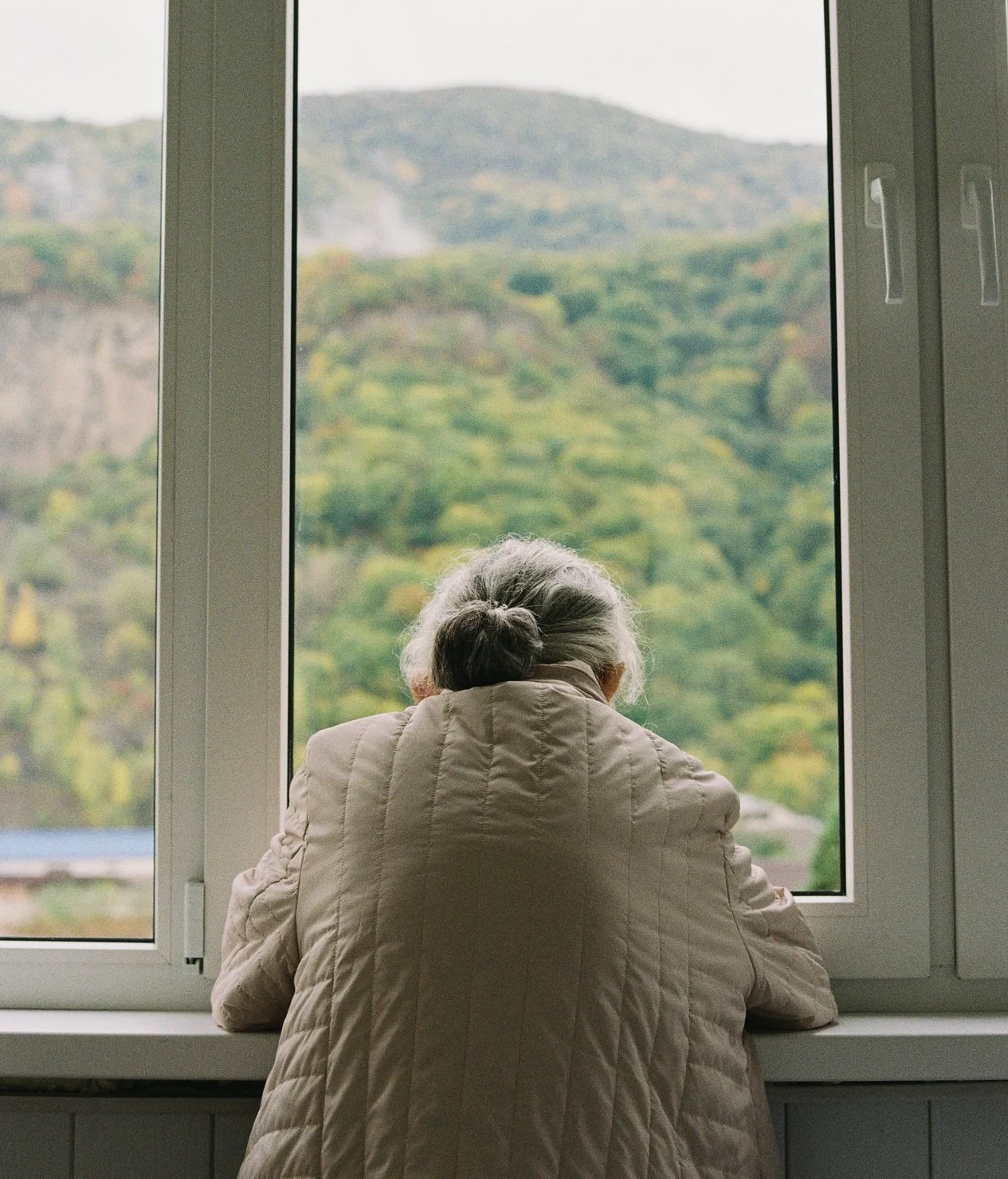
“My dad got diagnosed on Tuesday, and I’m scared.” My friend’s text comes in the middle of the night.
I sit on the toilet at 3 a.m., considering how to welcome her to the most awful club.
My own mother was diagnosed with dementia a few weeks into COVID, shortly after my husband and I had asked her and my dad to move nearby and help with the kids, drowning as we were in online kindergarten. My mom had been a little “off” for years, and then forgetful, then increasingly paranoid. But she’d always been in love with the grandkids and our family. It was both a devastating surprise of a diagnosis, and not.
Now, years into this experience, the texts come regularly when friends’ parents are diagnosed. Every time I pause. What can I say that will help? What can I share of my experience that isn’t just the pain, the pain, the pain? There are so many things I want to tell her, and so many that I feel I can’t.
I lie awake feeling the chasm between myself now and myself the moment of my mom’s diagnosis, trying to find rocks to stand on in this river — something solid I can share with my friend, something that might steady her as the current pulls.
I’ll tell her what came before the diagnosis, because I know my friend’s loss has already started. The months or years before a diagnosis are their own kind of hell, not knowing what is happening. Questioning one’s own mother — wondering if she’s aging or sick or just being difficult — is a loss of its own, even before doctors are involved.
I’ll tell her about my mom showing up when my daughter was born, paranoid that our house had bed bugs despite no evidence, no bites. I took my newborn to the library when she was two days old so my husband and dad could inspect everything. I felt angry, abandoned, confused — I’d just given birth, but she was the one acting crazy. Now I know she wasn’t crazy, she was sick.
I’ll tell my friend that I hope now she is less lonely. My mom’s diagnosis at least gave a name to the pain I had been feeling of losing someone I loved, and it allowed me to talk about it more openly with friends. While there was so much grief in her diagnosis, there was also a clearer way to understand what my family had been moving through.
Along with the diagnosis came endless, impossible decisions. We spent a long time terrified of moving my mom into a care facility. She was the matriarch of our family, deeply in love with my dad and her garden, and it felt dehumanizing to take her away from what she knew. But she was wandering alone into the snow, waking up in the middle of the night to unplug every single appliance in the house, convinced the computer was going to catch fire. My dad wasn’t sleeping. My siblings and I became just as worried about his health as our mom’s.
There was a precise pain I felt the last time my mom was in my house — knowing it would be the last time, knowing she didn’t know that. She was joyful. We’d had Christmas with all the grandkids, and she and my dad had worn train conductor hats as the kids collected hot chocolate from them, Polar Express style. But she was also having bizarre mood swings and flashes of anger — at one point she tried to put out the fire with a large butcher knife.
The move to a care facility was clearly the right call. The experience reminded me of my kids starting daycare. It felt like a HUGE deal beforehand, then once she was there it was clear she was so happy. I slept better knowing my dad could rest and my mom was chatting with her new friend Martha over puzzles, and happy singing in the afternoon sessions. I fell in love with the people who cared for her, just as I had with my kids’ daycare teachers.
I’ll also tell my friend some small things that helped. When my mom had first shown signs of dementia, we encouraged her to complete a StoryWorth book. We now read her stories to her, and they calm her. My daughter reads them in her own bed every night. Sometimes that makes me cry. When she was still home and starting to wander, we put an AirTag in her shoe. We try to take care of the staff of her facility with the same care they give her — stocking the staff lounge with snacks, writing thank you cards, offering genuine gratitude.
Lying in bed in the middle of the night, I hold onto these practical steps like a life raft, because the emotional truth is harder. I’ll tell my friend that nothing anyone says will feel good. Things I hear regularly — “this has been so hard for so long” and “it’s happening so fast” — make me want to throw things even though (or, really, because) they are true.
But I’ll tell her what did help: friends who showed up without words. Junk food waiting at my parents’ house before a tough visit. Fancy shower products after I mentioned crying in the shower. Their presence in the hardest moments made me feel less alone.
Mostly, when I talk to my friend, I will tell her I am so sorry.
But I will not tell her everything. I will not tell her what’s coming, because if I had known how painful this was going to be, I would have welcomed the bed bugs, the fire, the knife.
I will not tell her about emergency calls to my therapist; the reports we get from my father’s daily visits; my mom currently being on her thirteenth month of hospice. I will not tell her I now understand the word agony.
Instead, I might tell her this: My mom was a woman who loved to help. A theater director and school librarian, she loved nothing more than telling people what to do. In some ways, helping friends now feels like honoring her — trying to make sense and meaning of her story.
When I’m talking to my friend, I also know I will have the exact same feeling that I still have when sitting by my mom’s bedside — there is so much more to say, so much left unsaid. I will want to say to my friend, as I want to say to my mom, she is doing great. The love won’t go away, it never could. Everything else may go, but as the current pulls us both forward, I can tell her this: the love remains.
And of course, I will tell my friend the one thing I cannot truthfully tell my mom, as much as I want to — she will survive this. She will. Most days, I remember I will too.
Kathleen Donahoe is a writer and poet living in Seattle. She has previously written for Cup of Jo about how she stopped drinking. She is writing her first novel and warmly invites you to follow her free Substack newsletter, A Little Laugh.
P.S. Rebecca Handler’s beautiful essay on loving her father through his final years of Alzheimer’s, and a parenting realization that really moved me.
(Photo by Darina Belonogova/Stocksy.)
Tags: grief, parents, personal essay
Comments
140 commentsMy mother died of dementia 18 months ago and this is the truest thing I’ve ever read about a parent with a memory illness. The loneliness, even with all the supportive friends, is palpable. It is a journey only you alone can take with your loved one, but it is beautiful journey worth taking.
My father died from Alzheimer’s 14 months ago. This post captures the difficulty of it so well. For me, the hardest part of loving someone with dementia was the prolonged grief. You lose them long before they die, and at first, you don’t understand what is happening. It’s a very complex emotional journey. The grief that I feel is for the man I knew as my father 10 years ago. I look back into my memories in search of him, trying to remember. Thank you, Kathleen, for putting your story out there so others have a glimpse into this difficult path.
Wow, so many feelings. My Father had Alzheimer’s and I cared for him until his death a year and a half ago. My mother currently has Lewey Body dementia and I am still caring for her. I am exhausted, but can’t imagine moving her into care. She’s aware enough to say she’d hate it, but constantly suspicious I am drugging her. The first person I would talk to about everything now cannot really hear me or see me. The sorrow is overwhelming. I think what I’d say to a friend, and have, is that you shouldn’t underestimate the pre-grieving you will do. It was a bit different with my father, who was what someone called “happy-demented”. He was softer, kinder, easier going, through most of the journey. But my mother is scared, hallucinating, paranoid and uncooperative. It was not a steady decline with either of them. There are sudden drops, and level plateaus. And each time new losses and deficits appear, each time there’s a shift in our relationship, I grieve anew. It feels like unending grieving. When my dog passed on two days before Christmas I thought my mother would become unmanageable. She loved our wee girl so much and believed when our pup got sick that it was because I was drugging her that she was unwell. But she surprised me so much. She understood our girl was very old, and she cried with me and we comforted each other. It’s easy to forget, through the endless difficult moments, the incontinence, the accusations, that sometimes your person is still fully there in the important ways. In truth, the only way out is through, and the horror of that is knowing the suffering only ends after more worse suffering. There’s such internal conflict knowing that sometimes you just long to be free of the burden, and knowing that the only route to that is the death of the person you love. What a nightmare. What a day it will be when science finds a treatment for this scourge. I extend my love and support to anyone going through this. Learning about other people’s experiences really can give you a lifeline.
Oh yes- the Big Deal of moving to a facility, and then the peace of having her there. So much this. Sending solidarity from another member of an awful club.
Thank you so much for sharing this and opening up the dialogue. Does anyone have advice for when you can tell that your parent’s cognitive abilities are slipping, but you as the child have a more distant relationship with them? My mother has been going down the path for several years now and I feel like my sister and I are the only ones that see it. I’d like to tell her to visit with her doctor, but there will be a lot of lashing out and blame, and I don’t think she actually will do anything about it. She’s in an emotionally and financially abusive marriage, and lives 4 hours away from me. I don’t visit. I don’t know if there’s any use in forcing a cognitive exam at the expense of the shreds of relationship we have now, or if I should just sit tight and wait until it’s obvious something must be done.
Thank you for sharing your vulnerability. Reading these comments after reading your beautiful, thoughtful piece shows that you craft safe spaces for people to engage in honestly and with love.
I am so curious about anyone who has experienced a parent getting diagnosed with dementia/alzheimers. I am currently navigating this exact situation with my father, but he is very resistent in admitting that anything is even wrong, despite mounting evidence that something is not quite right. Any advice on the pre-diagnosis and steps taken would be greatly appreciated.
Megan, we looped in my moms primary care doctor prior to her seeing the doctor. This triangulating felt VERY bad at the time (my mom was always the smartest and loudest in the room, and going behind her back felt very weird) but it helped to have the conversation about concerns beforehand, and then conversations afterward about how to manage her care. I’m very sorry you’re having to navigate this part, it’s extremely hard.
Join the crew at Reddit r/agingparents and ask there
I’m struck reading these comments how universal yet different everyone’s experiences are. As a mother to an 18 month old, it reminds me of birth – something that happens all the time but is different and life changing for everyone who experiences it. My dad has been experiencing cognitive decline for at least 10 years, and still only has the diagnosis of “mild cognitive decline”. Testing ruled out Alzheimer’s and I’m not sure what else needs to happen to get a dementia diagnosis. At this point, I’ve accepted the limits of medical testing. I think it’s important that my family tried to pursue a diagnosis and got some information about it (images of a shrinking left hippocampus) and care (cognitive behavioral therapy), but I also find it somewhat insufficient. Our orientation toward wanting something definitive doesn’t always create meaning. For his case of not-Alzheimer’s, not yet officially dementia, there aren’t really medical interventions. He struggled more with regular appointments and absolutely dreaded the memory testing, which he finds humiliating and which creates an existential crisis every time he takes one where he realizes something is wrong. It might be the right path for some, but I think we’ve decided maybe we pass on further memory and stress testing. Two things I wanted to share – 1) Courtney Martin writes a substack about her experience with her dad’s cognitive decline that I find incredibly moving. She often shares practical resources for caring for yourself, understanding this illness, and related to family communication. 2) I was in a very progressive, Catholic family where Corita Kent’s artwork was present. My grandma has a small poster in her kitchen that says “to believe in god is to know that all is fair and that there will be wonderful surprises”. I find myself turning that phrase over in my head often, and also want to offer that there have been wonderful surprises since this started. I know irritability is common, but my dad is actually more mellow. He was a good parent but easily annoyed, very intimidating when upset, and not easy to speak openly with. I am at my closest to my dad now because his dementia has forced him into the present in a totally new way – he is a wonderful grandparent who can play with his grandchildren for as long as they want. He’s not constantly thinking ahead or of how things should be, he is accepting, interested, and not distracted. I don’t know how much longer we will have this version of him, but despite the pain and sense of loss, I am so grateful for all we’ve gained.
Thank you, Claire! This comment resonates with me, as did the article. My mom has been in decline for a few years when it comes to memory but my dad feels the interaction with the medical system just hasn’t been worth it—there is very little that modern medicine can do so what exactly is the point of all the appointments and stress? We work hard to keep my mom socially, intellectually and physically active since it seems those are the most important ways to combat the decline. We will be going to a specialist soon and hopefully they will be able to offer something to help my mom or our family. Thinking of everyone dealing with this.
You are telling my story, except that my dad won’t get memory testing at all and my mother refuses to accept that anything is wrong. But my previously angry and self-absorbed dad has become a wonderful grandfather and sort of sweet. It’s a nice change and I’m trying to focus on that when it feels like there’s nothing else I can do. Standing with you in solidarity.
Thank you so much for posting this (and to the other commenters, to). Having read the article with tears in my eyes, I particularly resonated with the desire for a diagnosis, despite the crushing realisation that it won’t change the reality (particularly as in my case my father has multiple complex health issues so any of the experimental drugs that my mother hopes might magically cure him won’t be applicable). It also reminds me to count my blessings that in his case he too is peaceable and accepting of his situation at the moment, and how lucky I am to have that, and my three beloved siblings to help support both my parents through the future months and years.
My mom has dementia and there have been so many painful moments – when she had to stop driving, when she had to move to assisted living, when she knew about her diagnosis and was terrified, before her diagnosis and she was anxious and scared, when she was still aware enough to know she was losing her abilities – it’s all so much, too much. Right now I feel like I’d rather end my life than have her experiences. She was able to live on her own and to be fully in her life until about 85. I know so many things can keep me from this – but right now I plan to end my life at 85. I just can’t see living through the slow death of dementia for myself or my children. I’m 66 now and a million different things could happen over the next 23 years – and I do not want to live the life my mom is living.
Have you seen the documentary Sweet Death, produced by Viggo Mortensen? I highly recommend it, it’s about an elderly woman whose mother died with dementia and she’s looking for a substance to end her life….just in case.
100% agree. If am ever diagnosed with a terminal illness, no matter how young, I am going to look into death with dignity options. I really don’t see the point of being alive with something as torturing as dementia, especially when it’s a huge burden on others as caretakers.
🫂 I absolutely hear you, Anon. My very first memory of witnessing pain came when I was about 5 or 6. I was placed on the memory care facility bed of my grandmother. Alzheimer’s had rendered her non-verbal at that point. Looking into her eyes told the story of suffering I didn’t yet have words for. I burst into tears. So did she. The terror of experiencing her fate remained in my subconscious for years. Once my mother started showing signs of the disease, at least I had the comfort of having learned about end of life options. I believe so strongly in medically assisted dying. That’s not a decision either one of them made, but I know what I’ll do. We all deserve *at least* the level of compassion we give our pets.
Ugh. I feel this acutely. My mom died when she was 68 from Alzheimer’s, but she’d been showing signs since my second was born. She knew something was wrong before that because she retired early. My mom fought against getting a diagnosis. We got the wrong diagnosis at first from a neuro psych (“not alzheimer’s! Just the worst case of short-term memory loss that he’d seen in someone her age). She was one of my best friends – loving, fun, and so, so good to so many people. It was, as you stated, agony. My dad took care of her in their home as long as he could, but like your experience, it became too much. Much of the worst of it was through covid. He lives in a rural area and we had terrible luck with in-home help. He later admitted he had noticed himself becoming mean sometimes. He was devoted to her and felt so much guilt. I won’t romanticize memory care. It’s incredibly expensive, the quality of care was not good, the staff were undertrained and overworked. I’m grateful she was only there about six months. We mourned her for almost a decade as she slipped away. She would’ve hated it — seeing us suffer, being in memory care, the crappy medications and the overmedicating at times, the indignity of it all. I hate that it happened to her, my dad, my brother, our family, and friends. She died on April 1, 2023. Remarking on how her death seemed out of the blue (we knew it was coming, but not that it was imminent) my dad said, “Well, she sure fooled us.” Her absence is still so profound. I can’t see a silver lining in the disease or the death, except we were grateful for the relief of death. I’m just afraid of it happening to me or my husband or my brother or my kids. I’m doing what I can to be healthy, but it kind of becomes a bit obsessive at times. Like, I have to eat these blueberries, I have to exercise, I have to be sure I’m learning enough. Must check all the boxes! I so want to look forward to my golden years with my husband, but at 41, I’m nervous I only have 20 years before my slow decline. So, I just kind of try to tuck that away and focus on what can control. There’s so much good in this life and dementia isn’t a guarantee. I’m sorry to anyone facing this. It takes so much. If nothing else, you come out with a lot more empathy.
Love this. While not dementia, I think so much of this essay can apply to any life-changing diagnosis: “While there was so much grief in her diagnosis, there was also a clearer way to understand what my family had been moving through.” “I will not tell her I now understand the word agony.” “And of course, I will tell my friend the one thing I cannot truthfully tell my mom, as much as I want to — she will survive this.”
Thank you for sharing this. We’re currently dealing with a vascular cognitive impairment diagnosis with my father and it’s been really challenging to understand what his prognosis with. His doctor refuses to call it dementia (even though many places call it vascular dementia) and having watched my grandmother progress from dementia to alzheimer’s, I’m having a tough time separating the diagnoses. Any suggestions for folks early in this process of a VCI/vascular dementia diagnosis would be greatly appreciated!
Brittany, my mom was officially diagnosed with vascular dementia, although in my heart I believe it was Lewey Body, but her decline made a proper diagnosis unnecessary. For me, my mother’s illness was anything but linear. In the beginning ask as many questions as you can and write it all down. It is an overwhelming process and you will want to refer back to your notes later. Hang in there, it is a long, difficult road, but there is beauty in witnessing this life.
I found Shasta through a podcast she hosted on friendship (which was great). I’m now following her husband Gregory, who was recently diagnosed with Alzheimers and is blogging about it. More info on him and his journey here: https://beingpatient.com/greg-nelson-purpose-blogging-through-alzheimers/
This piece is so beautiful and touching and as a 42 year-old mom with a toddler and parents in their 70s, is exactly the type of conversation I am having with my friends right now. Thank you Kathleen for sharing your story with us, and especially to Joanna who continues to evolve this blog and community to meet us where we are. I am forever grateful to have found this warm corner of the internet.
This post is beautiful and I’m thankful for everyone sharing their hard won experience in the comments. I haven’t been able to find much advice online for me/our situation. My MIL has been gently raising the alarm about my FIL for some time now. I think he probably has some kind of dementia (showing occasional short term memory loss, heightened irritability, impatience, impulsivity). However he is extremely resistant to any suggestion that he should maybe see a doctor. He himself was a doctor so there’s all the expected mix of male ego built around intellectual achievements. Is there any hope for getting through to him? My husband doesn’t deny that there are worrying signs but is not willing to push it yet. Do I defer to his rhythm? Do I use my less central position as DIL to be the one to say “you need to get help”?
This is so hard because who wants to hear any scary news and whom is the preferable source to be able to get through to encourage your FIL of the need to seek out answers. Perhaps it is his PCP? Maybe some physician colleagues? My aunt started showing significant signs of dementia and it was determined that her cognitive decline was related to a cancer related treatment she was undergoing. Once she stopped it, her cognition returned. So perhaps the nudge to get a check with his PCP could be under the auspice of a general check up? And maybe you, your husband or his wife could speak privately with the PCP first to raise concerns so that discussion can take place during the visit? Best of luck!
Late to this but also please note that these signs your FIL is exhibiting are also among the signs of depression (showing occasional short term memory loss, heightened irritability, impatience, impulsivity) and is sometimes called pseudodementia. It could be a chemical imbalance or a variety of issues but also please consider that possibility. Still not easy to get someone in for care who is resistant, I know. Thinking of you.
I commented this as a reply to someone who brought up their grandmother’s experience with it in the thread, but repeating in the main thread. I don’t want to seem harsh or upset anyone – but we should be pushing for legal doctor-assisted death for illnesses exactly like this. I know this is available in Europe, and Death With Dignity is working on initiatives to make this available in U.S. states. Currently, this is available to residents of California, Colorado, Delaware, Hawaii, Illinois, Maine, Montana, New Jersey, New Mexico, Oregon, Vermont, Washington, and the District of Columbia who are terminally ill. People should have the right to die when they choose and without long-term suffering.
The current UK govt is working on this but it is very contentious. I read a really great article about all the problems with what our parliament is calling “assisted dying,” which of course I now can’t find… But this piece lays out some of the issues: https://www.disabilityrightsuk.org/news/say-no-assisted-dying-fazilet-hadi (I have lost two grandparents to dementia.)
I think part of the challenge is that cognitive diseases may not be considered terminal illnesses – even though they are.
I’m in Canada, where assisted dying (called MAID here) IS available for dementia – however, it comes with a ton of challenges as well. My mom got diagnosed two years ago and would have never ever wanted to live out her days in a care facility, no matter how lovely. So we looked into MAID. The thing is, what my mom really wants is an advanced directive. This means, she wants to access MAID when she’ll no longer be able to care for herself or recognize her family. This is, theoretically, available in Quebec. In the rest of Canada, the person choosing MAID has to be able to consent in the moment – which means that, as a person with dementia- the decision would always come to soon, when they are still deemed capable of making choices and, by all accounts, lead a fulfilling life. This choice is devastating to my mom – and, doubtlessly to many others. We keep circling back to the option (a horrible but important conversation to have every few months), but I’m afraid by the time she voices that she is ready (if ever), it will be too late.
It feels like the ball keeps moving. When we are at full capacity, we think “of course I won’t want to keep going when there’s so little I can do”. Yet when you hit that point, at least as seen by others, maybe your current situation doesn’t seem so bad. I remember hearing from Atul Gawande about a woman who asked her aging father what would be a trigger for when he would no longer want to live. His reply…when I can no longer watch baseball and eat chocolate ice cream. For so many people, during much of their lives, this would be viewed as so limited. But that was what was meaningful for him – AND so helpful for his daughter. My mom – whom I referenced in an earlier post – never wanted to go into a facility. During one conversation I tucked away – she said only when she couldn’t remember her kid’s names, what day it was and if she was wandering naked in the streets, would she feel the need to go into a facility. That one little statement helped me so much at the end when these things were literally happening (though her naked wandering was in a skilled nursing facility – fortunately not outside in the winter temps). End of life is so so complex and multi-layered.
My mom was diagnosed with early onset Alzheimer’s a few weeks before she turned 53. I had just had my second baby. Our relationship had become strained because she had become really flakey – promising things, but then not following through. Showing up late to important events. Now, it makes sense. Then, I was resentful. She passed away this past September at the age of 64. It sounds like you are in the thick of end-of-life care. So I’ll send these words of advice. Make sure everyone is on the same page for end of life care. Those last few days of her life were excrutiating. She did not want intervention, so when she stopped accepting food, it was no longer provided. It took her a week from her last bite of food until she died. A full week of watching her diminish and go from present and awake, to unconscious-staring. I had seen my grandfather go through this 18 years before, so I knew what to expect. But it was still devastating to watch. And the emotions after have been a mix. Her death wasn’t sudden or unexpected. She wasn’t even “my mom” for the last few years of her life. But suddenly all I wanted was to share stories with her. I miss her terribly.
Seconding your words of advice. As someone who works at a hospice care home, it is so important to have advanced healthcare directives and proxy in place, and conversations about them, to understand the different options in various situations and make sure everyone is on the same page. This is really important at any age, so you can make sure your loved ones wishes are honored, and also your own.
What a beautiful post. I am living through this too. My mom had Alzheimer’s, and my friend’s mom was just diagnosed with dementia. I listen when that’s what she needs, and when she has questions, I offer my opinions because I don’t have answers. I don’t tell her everything. I want her to enjoy the mom she has now and not worry about a future version because that won’t help. I lost my mom 18 months ago. She was 88. I’m forgetting the parts that were hard and remembering the parts that were good/funny/sweet. My brother had a rough relationship with our parents when he was young. He and my father couldn’t fix that, but he and my mom developed a wonderful bond. I watched my oldest daughter move in with mom during COVID to care for her. Mom had so many crushes and imaginary boyfriends. I mentioned it to a co-worker whose mom had alzheimer’s, and she said, “Oh, she’s going through the high school phase”. As her memory faded, my mom forgot that she didn’t like dogs, so I was able to bring my dog, Strummer, to visit her, and she loved him. Finally!
gorgeous, and hugely helpful. (very) separately – is anyone else absolutely inundated with ads while they read this article? like big pop ups, lots of AI, things you had to constantly x out of? normally that doesn’t happen on COJ?
Oh varina that shouldn’t be happening — let us look into it. So sorry about that!
When my dad was first diagnosed with brain tumors (which turned out to be glioblastoma), I came here, to CoJ comments, because my dad was not ready to share with people beyond family yet. I had nowhere to put my fears and sadness. There was one reply, from a reader named Laura, that I saved and still think about often, that I would share with anyone who just received a devastating diagnosis for a parent: “Give yourself the gift of honoring and accepting the sadness, fear, overwhelm, anger, hope, all of it–you care deeply, profoundly, with the heart of the child you were and still are, the heart of the adult who know’s what is at stake, the heart of the human who is at an intersection of past, the bewildering now, and the unmapped coming days. ALL feelings are allowed.”
Thank you, Caitlin and Laura 🥹🙏🏽I’m going to save this.
Caitlin, My mom had glioblastoma (diagnosed at a vibrant 74, died a few months shy of 76), and “the bewildering now and the unmapped coming days” strike me right in the soft center of my soul. Thank you for sharing, and thanks too to Laura. I remember pulling up to the hospital for one of her routine visits to the oncologist, and the parking lot was packed, so I drove into the very long valet line. When one of the valet employees came to my window as I sat in the infuriatingly long line of cars, desperate to go be with my mom at her appointment, I rolled down the window and said, “PLEASE. Is there anything you can do? My mom is in there…WITH A BRAIN TUMOR!” He looked at me and said, “Everyone has a mom in there.” And while I understood his gist, I could barely resist saying, “But this is MY mom.” Instead, I sat in my car, crying with frustration at parking and cancer and time, thinking about how utterly bizarre it felt to say out loud, “My mom has a brain tumor.” Impossible, but true. Sending you love.
This is beautiful. ILY.
Lost my dad to dementia and lung cancer this year. I wish more folks had access to the wonderful care you describe. In part because of his dementia, which I don’t think we recognized early enough,he spent nearly all his savings and had nothing saved for his care. He also had too much in Social Security to qualify for Medicaid. The lack of access to health care in this county compounds all the pain that families go through with this terrible disease. Sending love and grace to all who are going through this.
I relate to this. My sister was just denied all services promised to her when discharged from nursing home because she doesn’t qualify for Medicaid. She sold our childhood home a few years ago and heaven forbid made a little profit but not much. It was dilapidated and had once been condemned. But not allowed to make more then 5000 for a sale in the last 5 years. The profit is totally gone because her pension is 500 ( nurses aide 40 years ) and her soc sec is 1200 these numbers are ridiculously low and it’s crazy when you think of the millions and billions others have illegally like Clarence Thomas and all these billionaires and millionaires. They would laugh at an income of 1700 monthly. But yet she is denied someone to help shower her a couple times per week or help her rehab so she can walk again. She’s been out over 3 weeks now, no rehab as was promised. Guess they just want her to sit in a wheelchair and melt away. The inequality in this country makes me sick.
My heart aches for your friend, and for everyone that has to navigate dementia. My mother died of dementia/alzheimer’s 2 years ago, it is an absolutely brutal disease.
Oh Kathleen, this was so beautifully written. As a hospice nurse I want to tell you (and I really hope I speak for all of us) we cherish caring for your loved one. When I first started this position I was often saddened that I didn’t get to know my patients prior to their disease, but now I think of it as a gift that I only get to know them in this stage, because I get to look at them without the grief of losing them. I get to hold their hands and be whomever they need me to be – their mother, their sister, their friend they are inviting to a sleepover, without it breaking my heart that they don’t recognize me. Always give yourself grace and know that on the days it is too hard to see them, we are there and we are laughing with them and caring for them and listening to their stories.
This is so beautiful, Molly. Everyone should be so lucky to have a caregiver like you.
😭😭😭😭
I really needed to hear this, Molly. I’m crying. Thank you so much.
Thank you, this disease has struck my family for the 3rd time- grandmother, mother and mother in law. You know you need to be kind, but it takes the patience of a saint. Love to all dealing with this brutal disease.
This was beautifully written and captures the agony so well. I lost my Dad to lewy body dementia almost two years ago and it is still painful. It was like my Dad was a picture that pixilated and we lost little pixels of him over time, there are 1,000 little griefs you deal with. If you are going through this with a loved one all I can recommend is to honor your grief all the way through and give them plenty of hugs. Or just hold their hand.
Thank you Kathleen for this essay, both raw and gentle. I lost my mother to early dementia last year and I see so much of her in your words… the paranoia, the butcher knife moments and the agonizing decision to move her into memory care (and then the relief!). I would wish this grief on no one and yet I know our community seems to keep growing. I am wishing you peace in this last chapter with your mother.
Beautifully observed and poignant and funny and bittersweet. The best kind of writing. Brava!
My father was diagnosed with early onset Alzheimers when he was 52 and I was 19. My Mother and I handled his care for about 7 years till he became too aggressive to handle. He passed when I was 28. I am 44 now and often think of how lonely it was for me to be that age when all my friends were in college partying and I was working two 12 hour days a week so my mom could still work and we could alternate care days. No one could wrap their heads around what I was going through. I was by far the youngest at the support groups. At times I felt like the people there were scared to even look at me, as if I was a reminder that it could happen to someone so young. As a mom now I cannot imagine handling that emotional wreckage and parenting at the same time, the ignorance of youth in hindsight was a gift. I have so many friends now with parents who are being diagnosed and I feel blessed to have the gift of empathy. To let them know the feelings they have are normal. Its ok to be angry that this is happening, you aren’t angry at them. It is the strangest grief to lose someone but have their physical presence.
Beautiful ❤️
https://www.walkwithmedoc.com/. A wonderful film about caring for and living with Alzheimers Disease. See upcoming screenings in the Bay Area and NYC.
not dementia, but my dad passed six months ago from stage 4 glioblastoma (aka terminal brain cancer). like dementia, his mind was taken from him before his body. it was horrific to watch and the anticipatory grief was horrible and hard. this piece is beautiful <3
I’m so sorry. In my line of work I take care of a lot of patients with GBMs and it’s an awful disease. A few months ago I had two patients in their 30s with very young children. It a heartbreaking, slow and devastating loss.
I’m so incredibly sorry for your loss, Jackie. Glioblastoma is such a cruel disease. My dad passed away two and a half months ago from the exact same thing, and your words about his mind being taken before his body resonate so deeply with me. Watching that unfold is something I wouldn’t wish on anyone. What you said about anticipatory grief being horrible and hard really hit home. Even before his diagnosis, I felt it creeping in — sensing that something wasn’t right, watching changes I couldn’t explain yet, grieving in a way without fully understanding why. Once we had the diagnosis, it almost put a name to something my heart already feared. My dad and I had such a special bond. We were always having long conversations and debates about everything — ideas, art, politics, life, random curiosities. Losing him felt like losing one of my greatest teachers and one my favorite person to think out loud with. When his mind started slipping away, that part was especially heartbreaking. Thank you for sharing your experience, there is some comfort in knowing we’re not alone in this kind of heartbreak, even though I wish neither of us had to understand it. Just sending a lot of love🤍
oof – my dad also had glioblastoma and you really are so right in that the way it effects the mind is so hard. i’m so sorry jackie
My mom passed away in January 2020 after battling glioblastoma for six years. I completely agree with everything that everyone else has said about the disease. I’m so sorry to see that so many of us have been impacted by it.
I’ve commented here in years past about caregiving for my gram with dementia. This takes me right back to that place. My family lives split between Los Angeles and the SF Bay Area. My gram had 7 children, but the logistics of work, commuting, housing costs and insufficient planning meant I became here primary care giver. What you can’t tell people is how painful it is to have the most disorientingly heartbreaking interaction and then have no ability to recount it. “How is she today?” someone would ask. I never knew how to say, she had an accident today and tried to hide it from me. While cleaning up after her I found the children’s art she collected ruined by poop smears. The Lisa Frank leopard I drew her in grade school, proudly displayed on her wall for more than 30 years, was now crumpled in a hamper to hide smear. I held my poopy art and sobbed for stolen minute. Then I showered a women I’d never seen without all her jewelry let alone without clothes. I reminded my fiercest protector of how to wipe herself from front to back. Chocking back the tears as I realized that I fought alone now. For myself and for her. I tucked her into bed at two in the afternoon on a spectacularly beautiful day, and closed the drapes as requested, blocking out the light and view of mountains that had brought her to this home. “I miss daddy.” she said. Meaning her father whom I’d never heard her refer to as “daddy” I wasn’t talking to my grandmother but rather his daughter. “Daddy kept everybody in line and everybody laughing.” She choked on a dry gasping sort of cry, while I just stood there offering her a water bottle. I sorted pills through eyes blurred with tears I wouldn’t let fall. It had only been 27 minutes since she came out of the bathroom after the accident. But that sort of grief could not be relayed to someone on their lunch break check in call. A call of obligation not care. They wouldn’t understand my heartbreak, if they even heard it. So instead I would respond “she’s okay. Fresh out the shower and resting now.” And that broke my heart in a different way. To everyone suffering the indignity, despair, confusion, frustration, cost, fear and feelings of failure this disease causes; I understand and I am so deeply sorry. I learned to kiss the back of my own hand in those years. It has served me well.
Sequoia, thank you so much for describing the heartbreaking nuances of caregiving. My MIL with dementia lives with us and it has been such a discombobulating and special time with her. Your last sentence made me weep, which I desperately needed to do. Thank you 🥹 “ To everyone suffering the indignity, despair, confusion, frustration, cost, fear and feelings of failure this disease causes; I understand and I am so deeply sorry. I learned to kiss the back of my own hand in those years. It has served me well.”
This broke me. I’m so sorry you lived this. She felt your loving care through it all. “The ability to see the end of what you hold dear turns out to be the mothership of holding it dear.” Xoxo
This is one of the best pieces of writing I’ve ever read. Thank you.
I lost my amazing mom over two years ago to dementia, and my heart aches for everyone trying to find their way through this. The best advice I can give might be too difficult for anyone to follow but it’s this- treasure and enjoy whatever is left. It’s human nature to focus on what you’ve already lost, but I sometimes think of one of my last birthdays with my mom when I felt a deep sadness that she was slipping away, but she was still HERE and she knew it was my birthday. I have tears just thinking about it. I would love to go back to that day and just sit with her and hold her hand and love her more. Another tip that helped me get through parenting young kids as I grieved my mom during her dementia journey- I would often wake up in the middle of the night and panic thinking about my mom. It led me to be so exhausted the next day that I couldn’t be a good, patient mom. So I started taking a CBD gummy right before I’d fall asleep at night (legal in CA). If I slept through the night, I never felt the effect of it but if I’d wake up at 2 am, I’d be too buzzed to start freaking out and I’d fall right back asleep. It literally saved my motherhood during the worst months. I highly recommend!! This is a time for doing WHATEVER works. There is so much more to say about this disease, but I hope this helps someone even in a little way. It sucks so bad, I still can’t believe we went through it. However, remember that death ends a life, not a relationship (Tuesdays With Morrie). Your parent will ALWAYS be with you as you live out the values they taught you. I feel this everyday, especially in these very hard times in the United States. I think my mom would be proud of me, and I can hear her voice talking to me everyday. You are so much stronger than you think you are.
First-time commenter, long-time reader here. This piece really touches my heart. My dad has been living with dementia for the past 5 years. It has been a long, slow decline. We placed him in a memory care facility 2 years ago and he did well there. However, as the disease has progressed he has become physically violent and aggressive with staff. After a four-month stay in hospital he was finally placed in a geriatric psychiatric facility where he is receiving great care. This is short-term, however, and we don’t know where his next home will be. Despite the heartache and prolonged grief, what I have found the hardest is navigating the health system. I am fortunate to be in Canada, however, there is a real lack of information and resources for families about dementia. Every step of the way where we have had to make decisions, it has been a struggle to find the information we need to make an informed decision. I have a friend whose parent was recently diagnosed with dementia and like many here, I find I don’t know how much to tell him. I’m glad to at least be a resource and support person to them with what I’ve learned. (To anyone else living in Alberta, the U of A is working on a research project to create expedited care pathways for those living with dementia.)
I feel this so much Claudia. I wrote below about our experience with my baba – we’re in Calgary and it felt like we were building the plane while we were falling out of the sky (with the added complication that she both started needing homecare and moved into dementia care during the pandemic lockdowns). I didn’t know about the study though – I’m now feeling cautiously optimistic that my mom might have better outcomes as a result of it. Big hugs to you and your family, and hoping that the right spot opens up for your dad. Ps. Part of me is improbably wondering if you might be my favourite childhood babysitter Claudia – did your family have a Wheaten terrier, and live in the corner bungalow on 15A Street in the mid/late 90s?
.S. haha oh my, wouldn’t that be amazing if I was that Claudia??! Unfortunately I am not. I’m in the Edmonton area.
Could you imagine! Worth asking just in case. Sending big hugs up to Edmonton!
“The love won’t go away, it never could. Everything else may go, but as the current pulls us both forward, I can tell her this: the love remains.” Oof. Thank you. It is indeed so lonely caring for the person who mothered me, moving her to a facility and caring from a distance and thinking all the things I could’ve done and could be doing…if only. If only circumstances were different. The last few years put me in a deep depression and grief that I’m working on getting through. She is different now, often cruel to me and I can’t fully understand what’s going on in her mind, but I let things go and love her the same. But man it is so hard.
Geriatric nurse practitioner here, reporting for duty. This is really beautiful and really interesting. Dementia is common and numbers will continue to grow as we get better at identifying and diagnosing it AND as we get better at preventing and treating the other things that kill us. Life expectancy in the US set an all time high in 2024, 79.4 years. I would encourage people to talk about this more and not hide the ugly truth about death and dying and dementia. There has been so much work around destigmatizing difficult and painful things (think racism, suicide, postpartum mood disorders, divorce…pelvic organ prolapse took center stage here on CoJ last week for goodness sake). We have to talk about these things. We have to acknowledge that life is hard and the end of life is a part of life. Not talking about hard things doesn’t make them easier to prepare for or cope with…it just sets us up to be punched in the tit by the unexpected and make us feel alone.
My mom was diagnosed in May 2025 with vascular dementia – I’d never heard of it before, and it’s been really hard. She had for the last few years seemed a bit off, and she’s only 64. The hardest part is I live in Australia, she lives in my home country Canada. We will move back there next year, but how much will change between now and then? I was home with my three and six year old for Canadian Christmas, and my poor mom was despairing at will the children remember her as she is now? What will she remember when we do finally move mid-2027? I feel helpless over here and am missing precious time with her. She’s already lost a lot of autonomy, needs someone at her doctor’s appts, gave up her home to buy a home with my sister, and I feel awful. And I feel frustrated she’s not doing enough to slow it down because she’s depressed. Now I also worry every time I forget a word, do I have it? (though it’s apparently not hereditary) Though I’m 44, I feel too young to lose my mother, does anyone else feel that way?
I’m just here to say that you’re never too old to feel too young to lose a parent.
Thank you for sharing this – I too am dealing with a recent diagnosis of vascular cognitive impairment for my dad (his doctor refuses to use vascular dementia as a term and it infuriates me because they won’t tell me what his progression will look like and so many resources out there are linked to progression to alzheimers but he doesn’t have the proteins related to alzheimers). Anyway, thank you for sharing how you navigate this as I’m just getting started as well. It’s hard to know what his future will hold…
Girl, same. 🩷🩷🩷
This piece is so timely, as I flew out to my parents a week ago to move my father into a long term care facility, both his mind and his body too far gone to safely live at home. My parents have been married over 50 years, and my dad took care of most financial decisions and big life things. So while I help orchestrate his care I’m also helping make sure my mom is taken care of. The sharp decline of my dad’s mind these last few months has been the most shocking, and while he’s technically still alive, I’m beginning the grieving process, because he feels gone. I would love to see more posts about taking care of elderly parents and being in the sandwich generation. Perhaps a series? As I figure out how to balance a toddler at home, working full time and now managing parent care.
THIS. I’m a solo mom of a 3 year old, I make 60 k and I cannot survive. I was in a meeting yesterday and my mom called because my dad refused to get into the car. I’ve lost a lot of my income due to there being ZERO public health jobs and feels like most of us are treading water.
My good friend actually has a podcast called The Sandwich Generation, and it is all about her experience (and her cohost’s) taking care of elderly parents while raising young children. It is funny and emotional and honest. I have found it so helpful: https://www.thesandwichgenerationpod.com/
This is beautifully written. Thank you for sharing ❤️
My mom died with Dementia, right before Mother’s Day in 2023. It is rightfully called the long slow goodbye. You should not tell anyone what it is really like. It’s much too much. My only brother died in 2018 but after a couple years my mom didn’t remember that. So I had to talk about him like he was still alive. It was incredibly devastating. You must change your expectations, over and over. A good visit was one where I didn’t go out to the car and cry.
Just over a year ago, I sat at my dying m-il’s bedside as my daughter was delivering my grandson up in Edinburgh. We had spent years sorting care for my m-i-l and she was finally safe and warm and well care for. It is all you can ask for when dementia winds its way to the end. It only goes one way. Be honest with family, do your best, do not drown in guilt. That day released me from all guilt and anxiety. All you need is love and courage.
I have so many thoughts and feelings about this as my mom passed away this past Dec from “senile degeneration of brain” – aka dementia. Her decline dragged on for years and then was so quick at the end. My mother was an incredibly independent woman and stubborn as the day is long. This served her quite well over the many years she was on her own after my Dad died. But wow, was it hard to reckon with the past few years. In spite of my dad planning financially for them getting the care they might need in their senior years, she was unbelievably resistant to having any sort of help. Very challenging when it was clear to everyone who encountered her that she needed more assistance and with that support, could remain in her home (which she adamantly proclaimed she wanted) for the foreseeable future. We had her tested over the years with geriatric services through her health plan and independent geriatric case managers and she dreaded those sessions which is completely understandable. It is frustrating for anyone when you realize you should know how to draw the face of a clock or remember what the date is, but can’t quite get there. Yet it was always someone else’s fault …those questions are stupid, I was just tired, my neuropathy prevents me from drawing a clock that anyone can recognize… With results from these cognitive tests worsening over time, her primary care doc finally reported her to the DMV as she was still driving. They took away her license and yet… she was still driving. We lived in fear of getting a phone call about a horrific accident. Her new geriatrician doctor wanted to start the proceedings for guardianship as there were concerns for her and others’ safety. I should mention that my siblings and I all live out of state and my one brother and I were doing all we could to support her from afar and manage things behind the scenes to help her maintain a sense of autonomy. Last fall, my brother and I went to visit with the intent to eliminate her opportunity to drive anymore. This had always been her biggest fear – that should wouldn’t have the ability to escape somewhere in her car. And I totally get it. But when she couldn’t remember how to put gas in the car or realized that she had a back up camera and drove 20 mph – not to mention she was now driving illegally, we had to do something. We tried all types of alternative sorts of transportation (having a familiar, private driver, having a home aide specifically for taking her wherever she wanted, ride share, city transport for people with disabilities). Finally we put a club on the car. She never even knew… She fell at home, went into the hospital, then skilled nursing and then we had to move her to assisted living because we didn’t trust that she would agree to home help given past behavior. It went downhill fast. We thought she would eventually adjust to assisted living but she was starting to get really delusional. We had just started making plans to move her to memory care when she broke her hip. She went on hospice and was gone within a week. It was surreal. Especially because she had been attending a holiday event and talking with a friend of mine on Friday night and by Saturday was bedridden where she would remain until the end. There’s so much guilt and heart ache and endless replaying of decisions. And there is also relief. Ooof – clearly – I’m still processing a lot of this. Apologies for the ramble. The best advice I can offer to others is: 1) Be kind to yourself – get into therapy or support groups, have friends who will listen, exercise, find glimmers of joy and laugh. 2) Don’t fall prey to worrying what others may think of how you are handling things – they aren’t in your shoes. 3) Tap into a community of support – my mom had amazing neighbors and a few friends who were wonderful. There was also tremendous services provided by a local faith based community group. My mom definitely couldn’t have remained on her own without these resources. Bottom line – don’t go it alone – its way too much.
Unfortunately, I experienced this with my father. At 69 years of age, he got the MCI diagnosis that eventually became FTD (dementia). Thankfully, he passed at 78. Aside from the joy leaving your family for all of the horrific reasons that dementia brings, has anyone else faced the fear that the dementia might be hereditary?
Every single day, Kristine. My mom’s mom had Alzheimer’s and my mom began showing signs during covid too. She’s turned 76 today, and the last year has been excruciating. Her decline has been so fast. I’m 51 and wonder if I only have twenty years until I have it. I’m squeezing every bit of joy and meaning out of my life no matter what, which is what I think we all should be doing anyway!
I think of that every time I can’t think of a word. Oh God. It’s here. Of course that thought blocks all other thoughts so you are completely unable to come up with the correct word. Brutal.
Every damn day! But my gram keeps graduating hospice and she’s actually forgotten at lot of terrible things she went through. She’s a shell of her formidable self, which is terrifying for me but she’s so happy most days. I’ve never known her to “happy” I’m leaning into that, also every bit of research I can. I asked her neuro team years ago if they were doing anything to help themselves and weight lifting, weight management, and dental care/oral health all came up so I try to prioritize those things.
Hi Kristine, Daughter of a mother with FTD here. The possibly genetic component is the little black cloud that follows me wherever I go… but I am getting better and better and shooing it away. FTD is such a particular grief. I highly recommend therapy if it is available to you. Living in the “what if” space is not really living at all. Sending you peace XOXO
It is my biggest fear to get dementia later in life. The only thing that helps me quell this fear is that here in the Netherlands it is possible to choose assisted death after you receive a diagnosis of alzheimers. You do have to go for it before you lose the ability to make clearheaded decisions (so you have to be relatively early, you cannot wait too long because “it is still OK now” because then the window of opportunity might just pass without you noticing – this happened with my grandfather). My grandmother chose this option last year, she had seen my grandfather decline and eventually die of alzheimers for ~16 years, so she knew what was ahead of her. The process of applying for an assisted death because of dementia is complex, and also personally complicated because you are always a bit too early – but when things get really bad you do not have the mental capacity anymore to apply for assisted death. The period before my grandmothers death was intense but beautiful. It is really weird to know someone is going to die next week thursday at 10:30 AM! But also a good reason to drop by every day and eat lots of cake and sit together and say everything you want to say and hold each other when everything is said. I will choose this over the certain decline any time.
@Marte – was coming here to write about this very topic! I didn’t want to seem harsh or upset anyone – but we should be pushing for legal doctor-assisted death for illnesses exactly like this. I know this is available in Europe, and Death With Dignity is working on initiatives to make this available in U.S. states. Currently, this is available to residents of California, Colorado, Delaware, Hawaii, Illinois, Maine, Montana, New Jersey, New Mexico, Oregon, Vermont, Washington, and the District of Columbia who are terminally ill. People should have the right to die when they choose and without long-term suffering.
yes!!
My best friend is taking care of her mom who has dementia; any form of support feels far too small for what she’s dealing with on a daily basis. Sending love to everyone in such a painful season of life.
I envy those of you who can feel sad and scared and full of love. I am just endlessly angry and frustrated at the way my parents have (not) handled my mother’s diagnosis and have refused to let my sibling and me help them handle it. Denial is understandable and even excusable for a while, but at some point, you have to suck it up and admit that this shitty cruel horrible disease is real, and take the corresponding steps to obtain care, put finances in order, and all the rest. And if you don’t, you put everyone around you and most especially your loved ones in a really rotten position, particularly in our harsh society where, as others have pointed out, decent nursing home care is wildly expensive. For awhile, my sibling and I actually wondered if our parents had a plan for assisted suicide, because it would have at least explained their total unwilllingness to take any other reasonable planning steps. In short, I wouldn’t wish Alzheimer’s on any individual or family.
Anon this time: you are not alone. I could have written your post myself. I often think that my mom’s denial (and my sibling’s denial behaviors, too) make my dad’s Alzheimer’s so much more painful. I found my mental health suffering tremendously (feeling better now, with some boundaries in place). Just sending a lot of love and empathy.
Hi there, you are not alone like another poster said. My mom is living with a moderate/middle stage Alzheimer’s diagnosis, my dad is not really addressing it like he should, and I’m at my wit’s end because I’m not in the same city and feel helpless. He still thinks if she “tries” harder, she will be able to remember what she had for lunch yesterday, or if she just “does some exercises” it will help stave off this disease. It’s infuriating and maddening, not to mention there has been no long term planning, financial or other-wise. I feel like a train’s horn is blaring in the distance and I’m stuck on the train tracks, slowly able to see the light from the train engine through the trees, and I know it’s going to hit me. I just don’t know when.
This piece is speaking loudly to me. I just spent 2 1/2 yrs rescuing my “baby” brother from eviction, homelessness and worse, he was in dallas, I m in SoCal. It took THOUSANDS AND THOUSANDS OF dollars, 2 trips in trailers back and forth (at his ill thought out plan) to get him moved here, into the Affordable care act, seen, tested, almost diagnosed…then he lost his coverage on a technicality, and it took another 6 months to get it all in place, and THEN the struggle to get him his SSDI awarded – he was 57 years old, divorced, and had liquidated EVERYTHING, to pay off child support and treat himself and a series of girlfriends to football and concert tickets, trips, motorcycles, trucks, fixing up a motorhome for a disastrous trip to Colorado in the winter…this man made (and spent) more than I did, for many years, even when I was on the road dressing rock stars, and he had not ! SINGLE PENNEY left, to care for himself. It cost me my own freelance jobs over 2 years, it cost me my relationship with my other brother and his wife, (who was formerly a good friend of mine), it cost my own daughter the therapy she had asked for, as i couldn’t get it all done. It cost me 8 hour days every single time I had to drive from my house, to other brothers house (2 hours away in Los Angeles) where baby brother lived, out to Kaiser even further for appointments, and then the reverse. It cost me gas and time and sleep and energy I did not have…and finally, I got him his full SSDI awarded. It took another 5 months to find a place in Southern California he could afford, as none of us could chip in. It honestly took 2 years and change from me and my own small family, and I am so so so angry. I feel badly, for not going to see him (it would be an all day trip, he is way out in the desert), but all those years of cheating on his wife, abandoning their 4 kids, spending all his savings on flying off to sports, shows, trips, with girls who dropped him soon as they sensed anything wrong…I just cannot bring myself to go see him. We saved his life, he is fed, and warm, and clean, and cared for. I think that is all I can give, and I did, and we are still paying off the expenses of all of it. This, after losing my grandmother, my mother, and my aunt (all same bloodline) to FTD before they reached 60. I hope what I have done is enough. I sure lost a lot doing it. :(
Anon for Now, you have done enough. Take my word for it. Believe me. When I could finally accept these words after cancer killed my mom, I feel relief of a caliber I never imagined. You did enough. I don’t know where this quote is from but I’ll share it: Kindness is doing what you can, where you are, with what you have. You did enough.
Gently – you are not obligated to care for people who do not care for themselves. Even if they are family. It’s ok to walk away.
I’m holding space for every person here today who is going through the unimaginable struggle of watching a parent slowly die. You don’t understand the agony of anticipatory grief until you go through it. It affects your body and mind in ways you didn’t expect, and it doesn’t go away when the funeral is over. I’m continuing to follow the brilliant advice that my therapist gave me when my Dad was first diagnosed with a terminal brain tumour: eat nutritious food and enough of it; limit alcohol; get outside and move your body; do whatever you can to get as much sleep as possible; and spend time socially with good friends with conversation that DOESN’T revolve around cancer. One foot in front of the other, people. You will get through this!
❤️ need these reminders
This was so beautiful. Thank you for saying the hardest parts out loud. This is my biggest fear, as it runs in my family. But the fear is not for myself-it’s for my wife (who’s 40) and my daughter (who’s 3.5). I don’t want this for them. Mourning my death, sure. But living with this for years, potentially? No. I hope to continue to be guided by my values (safety, self-respect, integrity) and have begun saving for and researching the Swiss respite, Dignitas.
Same, andreea. I have also started saving for Dignitas for myself. I may never use the funds, but I want to have that option open to me. I was a nurse for 20 years and also took care of my father in his home while he was on hospice until he drew his last breath. Those experiences played a role in how I view life, dying, and death. I know what I hope for and what I want for myself in the end.
I too would like to use Dignitas. If you are in the US, doctor-assisted death options are available in California, Colorado, Delaware, Hawaii, Illinois, Maine, Montana, New Jersey, New Mexico, New York, Oregon, Vermont, Washington, and Washington, D.C., if you happen to reside in one of those states.
That was a beautiful and delicate essay. I nursed my dad and mom through cancer and alzheimer in the last 10 years and it’s the hardest thing I have done in my life. It was also the most beautiful. Both things can be true. I know now that only love really matters and it has made me a much better person. Accompanying my parents to their last moment was so humbling. It taught me respect. Strength to you all if you re going through, and live it to the full. Love from Paris
This comment hits me so hard. My mom has metastatic cancer and my dad has Alzheimer’s, diagnosed within a year of each other. Thank you for saying all of this, and thank you for the hope.
Sending you a warm hug.
My dad just passed a few weeks ago. He no longer knew me, although he still recognized my siblings. It was hard and sad and prolonged, so I lean on remembering that he had a wonderful, full, fun, and very long life, marred by illness only at the very end. I am very touched by the writer’s account. It’s hard-won wisdom, for sure.
Emily, I’m sorry for the loss of your dad. I hope my kids describe my life the way you described your fathers- wonderful, full and fun. Sending love.
Adjacent to this very important topic, hospice care. I would love to see COJ tackle some hospice basics and stories, spread the gift of hospice fat and wide. My husband recently lost his mother. We tried for months and months to get her to accept hospice care, so that she could get the much deserved pain killing drugs she desperately needed (she couldn’t access them otherwise). She refused. “They kill you!!!” She adamantly replied, even after he patiently explained the truth about hospice and the goals and how much it could help her. So she went without and it was ugly. She finally agreed. The day before she died, when even she could finally accept the inevitable. She suffered so much more than she had to, all because she truly didn’t understand hospice (a highly educated woman without dementia). It was heartbreaking for all involved. Hospice care workers are angels on earth. And hospice provides humane, needed care that allows people to die with dignity and often peace. It’s so sad how misunderstood it is.
Yes! Hospice is such a gift. My father died with brief hospice care last summer, and they made a sad experience very meaningful for him and me. I just finished Nothing to Fear: Demystifying Death to Live More Fully by “Hospice Nurse Julie” McFadden. Such a beautiful book. She addresses all those fears about using hospice, and how it can make life so much better for the dying person and their loved ones. Love to everyone managing grief for their loved ones with illnesses or who have passed ❤️
Oh I love Julie, she’s a great follow on social media. Thank you for this rec, I will check it out! I’m very sorry for your tremendous loss Diana. I’m so glad for you that a tragic experience could also be a very meaningful one. I feel this way about my own father’s death, there was so much beauty within the depths of immense sadness.
Thank you for this post, I feel so seen as I too have a mother who suffers from dementia and the pain and grief of loosing someone who is still physically here but not here mentally or emotionally is one of the heaviest burdens I have ever carried. I could go on but I’ll just leave my gratitude for this post and my heart goes out to all those who have a loved one with this cruel disease.
My mother was physically very healthy until she became ill with dementia. And I believe that was why it took a very long time for the disease to progress. It really was the long goodbye.
Thank you for the beautiful essay and the way you care for those around you, including the care workers. I’m a nurse in a care home for people with dementia and know your cards and snacks are much appreciated.
Inez thank you for your important work. You are a blessing.
Wow, what a powerful, beautiful piece. Thank you for clearly articulating and humanizing what is so hard for so many. I’m sorry for what your mom, you, your friend, and their mom are going through.
Oof, this. My 94 year old baba has late-stage dementia, and we just passed the one year anniversary of her doctor telling us that she had 2-3 months to live. It is slow and horrible, and so, so hard. My mom, my husband, and I were her primary caregivers the last few years that she lived independently and like others have said, those were the hardest. It’s hard now too, but mostly emotionally, seeing my dynamic, funny grandmother now living in care, confined to a wheelchair, rarely coherent, sometimes nonverbal. It’s a version of what happened to her own mother, and it was her nightmare that it would happen to her too. The generational part brings its own anxiety: first it was my great-grandmother, now my grandmother and great-aunt. My mom, her sisters and cousin talk openly about it coming for them in the next 10-20 years, and my sister and I and our own cousins can likely expect the same in 40-50 years. We already see it a little bit with my mom and she’s only 66. She also lives alone, doesn’t have the kind of safety net my baba had, and my sister lives abroad so her care will be falling almost entirely on us. My dad has also needed care and support for years, not for dementia, but for severe mental illness. I expected to be a sandwich generation but we’re only in our late 30s and have two very little kids (3 & 1) and caring for our parents started way earlier than I had anticipated. I know this is not how life works, but I feel a little bit robbed of what my parents had – where their own parents were hale and hearty the whole time we were growing up. All of this combined with everything going on out there *gestures widely* – it’s a lot.
I relate so much to this. After seeing what Alzheimer’s did to my own mother, I cannot read a story like this without feeling a deep anxiety about my own mental health/memory/future.
This was so beautifully written and really hit home, as my dad recently passed away after a long battle with Parkinson’s. Every stage was like losing him a little bit more- grief at every loss. Thank you for writing and posting this piece.
Oh man. We’re going through this with my 76yo mother-in-law, who we live with. She hasn’t been diagnosed (yet, but I’m sure it’s coming), but I recognize the signs from when my grandfather had dementia. She still has more good days than bad days right now, but those bad days are ROUGH – a lot of yelling, foul moods, and breaks with reality. His father is 76 also and won’t be able to continue to care for her, but that’s not something we can really tell him, he’s going to have to come to that conclusion himself. And I’m in MN so there’s extra external stress so it’s been … a lot. Heartened to hear positivity around having your mother in a facility – my big fear with having my MIL in a facility has been her tendency towards aggression during this time, and what would that look like in a facility? Would they just have her restrained at all times? I don’t know. I’d hope she’d have the same experience as your mom, making friends and singing and doing puzzles.
I’m sure it varies widely depending on the person / doctors / caregivers / facility, but my grandmother also experienced aggression with her dementia and she was medicated for it, but never restrained. Big hugs to you, it is so, so hard, especially those last years of living independently.
Jill, I feel for you, what a terrible fear to have. In the nursing home where I work (Europe) we are not allowed (and wouldn’t want!) to restrain residents. From what I learned from some googling it seems that in the US as well restraining can only be used in specific cases. I hope this gives you some . Wishing you and your family all the best.
Yes to the medication. And they can titrate the meds and the dose so she’s not catatonic nor at risk of injuring herself or others. So much advancement in this space.
Sorry, I forgot a word. I meant to write some relief.
Jill, if it provides any comfort, the aggressive period doesn’t last forever, often a few months. Knowing it isn’t going to be a permanent state of being may make it a bit easier to deal with.
My husband’s grandfather should have been restrained and wasn’t, I don’t think they do that anymore. They eventually had to take him home as he basically was trying fight or f*** everything moving. But even during his absolute worst behavior he was safe and cared for.
I’m a hospice social worker and I just wanted to recommend Being Mortal by Atul Gawande for anyone thinking about living and dying and comfort care and curative care. I also wanted to say I love my patients and their families and think of them often all through their disease process and even after they pass. I’m grateful to spend time with some many who have dementia related diseases and know how impossibly hard it is for families. Often much harder than for the patients themselves. I hope it’s a comfort to know you’re seen and thought of as the children, partners, loved ones of these folks. Held gently from afar! And please know whatever feelings you are having – it’s not the first time we’ve heard it. It won’t shock us and you can tell us. We might be able to help or just listen. You’re a good loved one who cares deeply and that’s why you’re feeling so much or nothing at all. Xo
Thank you, Erin. <3
I’m a Radiation Therapist who read this early in my career, it really changed my outlook. Quality vs quantity of life, aggressive treatments vs hospice etc. Well worth the read. It also encouraged my parents to get advanced directives and their will in order so that was a small win.
thank you for this post! My mom has dementia, and I related to many of these things. I’m thankful to have a friend going through something similar because it’s definitely not as “beautiful” as I’ve often seen it portrayed in the media. We’re not dancing to the oldies and reminiscing over high school yearbooks. It just feels like a long, slow goodbye.
HIGHLY recommend another Washington-based writer Devon Pass (substack.com/@devonpass) who writes beautifully (understatement!) about her mother and Alzheimer’s and about life in general.
My bf and his family is working through this now with his mom. It’s only been a few months and everybody is exhausted. Their dad, who was mom’s primary caregiver, died unexpectedly so the grief is making her Alzheimer’s even worse. I cared for both my parents who died of cancer (hard in a different way) and I told my bf that when things were really bad I told myself I just had to get through one day. And then another. Try to be patient and find moments of hilarity and joy. Hang in there!
It’s been five years since my mom died of dementia and this article brought it all back with a thud. The disease is a horrible thief and I wouldn’t wish it on anyone to have to endure, for themselves or a loved one. What I’d try not to share (but would probably share anyway): The pain of hundreds of incremental, slowly mounting goodbyes and the endlessly compounding grief. Having to learn the art of “the good lie” – “No, I’m not sure where your [long-dead] parents are…it’s a beautiful day, maybe they’re out on the boat? Shall we have a cup of tea and chat while we wait for them?” The necessity of taking it all moment-by-moment and choosing very carefully the parts you’ll remember – those increasingly infrequent times when their true self shows through the fog for one shining moment. The healing power of primal screams in a parked car in the far corner of the hospital parking lot. Love to all of us who’ve been through it or are going through it, and are somehow holding it together. We carry on.
Oh the screaming in the car, I’d forgotten. Wow. You did good, Abby. I see you. We did our best moment to moment.
Wow Abby, you made me cry! Yes, it’s this exactly! The good lie—my father died of Alzheimer’s a year and a half ago and my mother who also has dementia, believes he has left her for another woman and another family. I know I am supposed to go along with her delusions, but how can I say “yes, he’s happy with his new family”. You really captured it in a few words; the screaming in the parked car of the hospital after a night spent with a parent with “hospital delerium”, an absolute nightmare in its own right. I’m glad you are carrying on. Hugs to you.
Powerful, poignant essay. As others have commented, it is fortunate that the author’s family was able to find a good care facility for her father–and that they could afford it. I would appreciate it if CoJ did a piece on the importance of financial and legal planning for one’s senior years — not just 401K stuff and having a will (though those are very important too), but long-term care insurance, having a designated power of attorney and medical POA, etc. Having dealt with elderly relatives who did not want to discuss unpleasant topics such as illness, disability, and death–and thus did little planning and almost no saving whatsoever–I can say this: spare your loved ones the pain and expense by making these decisions when you still can.
THIS. My dad had stroke on Dec 22nd and I’m a former case manager and I thought my parents has Medicare w/ presciption coverage. It’s all a mess and scammy as hell for seniors. Start a google doc NOW with all info now.
Oof I feel this so hard. I THOUGHT I was relatively prepared for this eventuality, and honestly, it was so much different (and worse) than I anticipated. In my mind (and I think in my mum’s), there was a binary OK- NOT OK. The reality was so much messier. There were days where she seemed fine, and other days where she clearly wasn’t, but neither were predictable. There were months where she was convinced she was fine and WE were the paranoid ones, getting increasingly worried as we saw her decisions become more nonsensical. For me, the DOUBT was the hardest. Did my mum just decide to sell the house because she genuinely wanted to downsize and my stepdad was dragging his feet, or because she could no longer understand why she owned it in the first place? Did she send me that long tirade about what a failure I am as a daughter because she meant it, or was this actually dementia creeping in? On the last one, I will probably never know, and it breaks my heart every day.
The lashing out and cruelty! If she did mean it, you know her expectations and perceptions were deeply flawed because we don’t actually owe it to our parents to live up to their expectations. I suspect it was dementia related, however.
Oh so with you on the doubt. I read this essay and I wish I believed the love will always be there but it is hard to remember the mom I loved, who I felt safe with, who I knew would always love me. Does she mean to push me and my sisters away? Has she been waiting until her 80s to finally be free of us? Maybe this is all she wanted all along, to be alone, to be free of our annoying advice and attempts to help and care for her. Maybe this is the true self she hasn’t shown all these years. I tell myself no, it’s dementia, which helps, but I don’t know. It’s so sad and hard.
So so many of us have had to do this with our parents, and while there is something wonderful about being the point person on dementia in my life, it’s so disheartening. I know what they’re going to go through. I know what they’re feeling. I go through again with them, to an extent, and it’s so so hard. I miss my parents, my mother who was such a force and was not by the time she let go to leave us. But the second thing I tell friends, after I’m so horribly sorry and I’m always here, is that, as cliche as it is, you cannot pour from an empty cup. You have to take care of yourself before you can do literally anything for anyone else. So yes, it feels selfish to take an extra long shower (to cry in, if you must), to take a walk, to go to the store by yourself (so you can cry in the car). But do it. You need a moments respite, a moments release, a moments rest, where you only look after yourself. Big hugs and love to anyone and everyone going through this. You can do it.
This is beautiful and terrible. Also I went to beyonce with Kathleen in 2016 and barely know her at all, but I am SO PROUD of her and thankful for her beautiful words all the time.