
The #1 Thing I Did to Make Traveling So Much Better
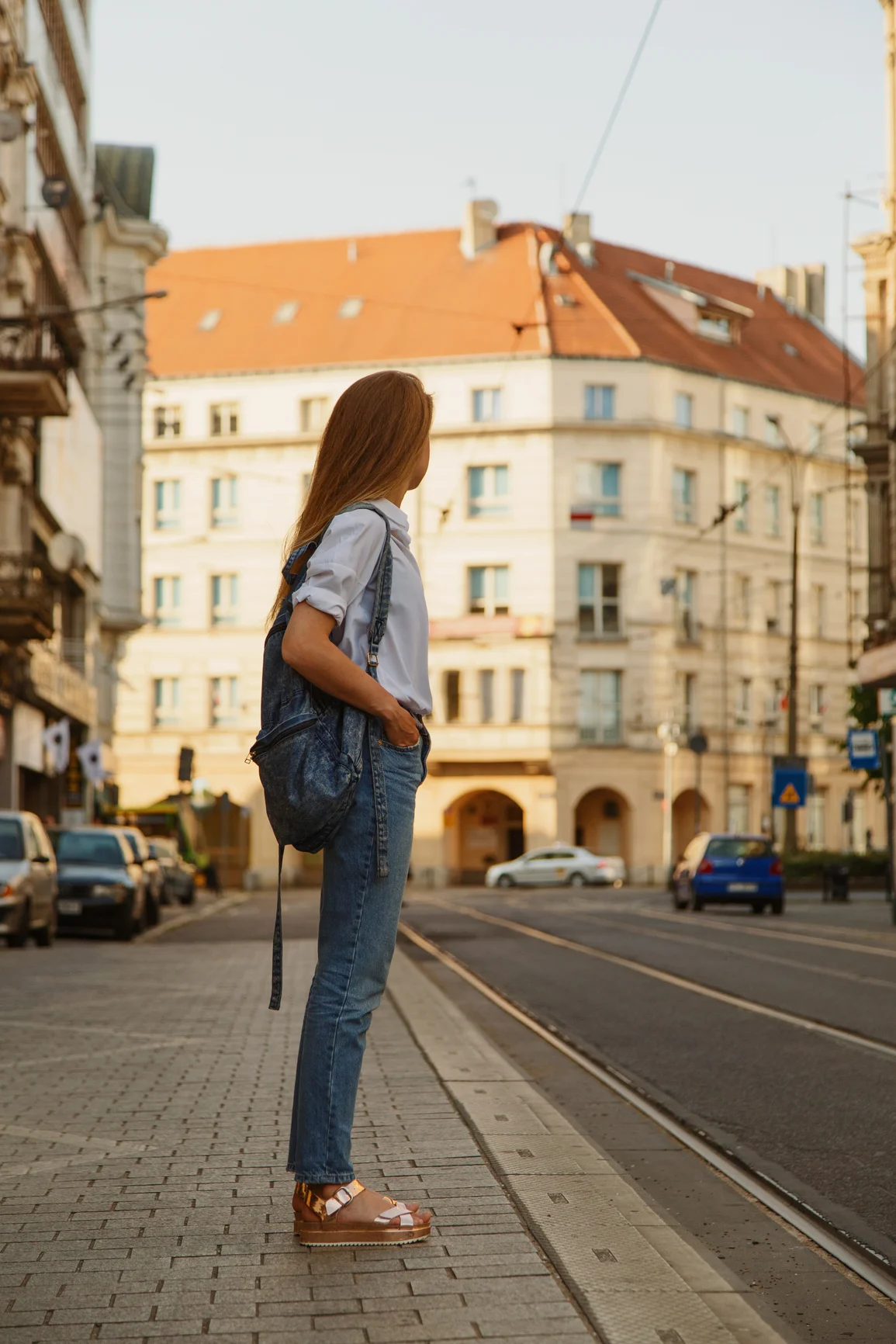
One afternoon many years ago, I dropped my bag in the middle of Prague. I don’t remember where I was heading, but I do recall that it was the first time I’d been alone in the dizzying Wenceslas Square during my semester abroad.
The cerebral palsy I was born with — which makes my legs criss cross and my balance erratic — meant that I couldn’t easily weave between cars, and the cobblestones under my feel didn’t help. Nevertheless, I had to get from one side to the other. And as I got to the final curb, I tripped. My bag flew off my shoulder, landing a couple of paces in front of me. I stood up as quickly as I could to grab my bag off the ground, but coins had already spilled out and a few people ran up and grabbed them. I don’t remember being hurt. I remember being embarrassed and angry.
Still, when I think back on that semester, I see it the victory lap of a childhood spent in training. From preschool to college, I’d go several times a month to the same grayscale physical therapy building filled with people who were committed to helping me fit in. We’d practice tying shoelaces and buttoning cardigans, as well as walking up stairs and crossing large rooms. They’d stretch my legs, as we chatted about the little dramas and passions that occupied my childhood thoughts, and then I’d watch them scribble down measurements that described my degrees of flexibility. Our shared goal throughout these years of appointments and post-surgery recoveries: I needed to get as close to normal as I could.
They cheered when I shed my walker, then crutches, then cane, as I learned to move unassisted. Wheelchairs were reserved for special occasions, like theme parks and airports, and I took pride in finding ways to minimize my differences. By the time I arrived in Prague, I felt the type of invincibility you can only feel at 20. But there was also a stubbornness to my confidence. I wanted to prove my normalcy.
Friends learned to lock their arms in mine as we walked across cobblestones, and that intimate connection lasted. Nowadays, during the rare times we actually walk in Los Angeles, we often stroll arm-in-arm. But over the decade since college, my body has changed. I can’t push it the way I used to, and it doesn’t forgive me as quickly. There’s more soreness and more resting. The balance I honed over countless hours of physical therapy has become dependent on my sleep. For a long time, I hid all of this, of course. To be normal.
“Have you ever thought about getting a cane?” my sister asked me not long ago. She said it in the way that big sisters do — like she’d been thinking about it and was now laying the groundwork. I told her that I stored our grandma’s cane in the trunk of my car. “But I didn’t need it,” I said. “I’ve worked hard not to need it.” She said something along the lines of “yeah, but…” before letting it go. Then, this summer, my cousin added to the conversation. “If it helps, why not?” she asked. My cousin had lived in New York City for years and knew I’d be visiting soon on my own. What a good reason to get a new cane, we all agreed. The stubbornness, while still there, was loosening its grip.
A few days later, I received an email from Michael Graves, a designer who focuses on accessibility. His team was debuting the Streamlined Cane, a sleek accessory that could be disassembled and reassembled in one accordion-like motion. I gratefully accepted his offer to try it, and the fateful package arrived just before my trip to New York.
No one knows my body better than I do. I know its limits and pains, I know what makes it feel comfortable and what makes it euphoric. I’m the steward of this near-constant project, the overseer of this thing that keeps me locked in but alive. At the same time, what a mystery my body is to me! What an open secret it is to the people who care about me. And what a labor of love it is to live with that tension. As I get older, I hope to better accept my needs as they evolve, rather than force my body to meet societal expectations that obstinately stay the same. I can be normal, or I can be natural.
On a recent rainy afternoon, I was waiting on a curb in Soho, as cars zoomed past and people hurried by. I was calm yet full of energy, with the cane firmly in my grip. A lady looked it up and down and complimented its beauty.
“It’s so helpful,” I replied. “I don’t know why I didn’t want one before.”
Kelly Dawson is a writer, editor, and media consultant based in Los Angeles. She’s written for Cup of Jo about dating with a disability and inviting a disabled friend over. Follow her on Instagram, if you’d like.
P.S. Disability can be funny (trust me) and five disabled folks on how to welcome everyone during the holidays.
(Photo by Danil Nevsky/Stocksy.)
Tags: disability
Comments
60 commentsAs my oldest and wisest friend often says, “Don’t should on yourself.” Sometimes we let the things we think we should be doing – often just because everyone else is doing them! – grow in importance so much that they block out everything else and become limiting. And it ends with us covered in should. Yuck! Let it go; live your life.
Love this. My four year old has Angelman syndrome and is still learning to walk. Originally, our goal was for her to learn to walk without a walker. But after some conversations with PT friends, our goals have shifted. If a walker gives her confidence, walking independently (with or without the help of a walker) is the goal!
The past tense of “shed” is “shed”, not “shedded”.
Fixed thanks!
I enjoyed this story and getting deep into a disabled person’s POV. Unrelated to that, I just wanted to voice my opposition to the click-baity titles that have become habit here. It feels like someone is trying to manipulate us readers. I would rather we were trusted to be interested in interesting content. Traveling tips would not be the reason any of us would want to read this beautiful story, but the title implies that’s what we’ll get out of it.
Thank you for your note, Molly! You have a good eye. When I chose to go with a vague title here, my thinking was that pieces on disability are amaaaaazing (especially Kelly’s) but they usually get less traffic than other pieces, maybe bc not everyone feels like they’re personally relevant. I imagine that the core CoJ readers do read them, as you mentioned, but I always want these pieces to get as far a reach and wide an audience as possible. So I chose a title that might draw more people in, since I knew people would love the piece when they read it. Hope this makes sense xoxo
Interesting comment and response. I would have sided with Molly before reading this, but Jo is exactly right here: I clicked because I had travel on the mind, and probably wouldn’t have clicked on article about mobility disabilities this morning. And yet, it manages to be relevant to some travel issues I’ve been thinking about it. And I enjoyed reading the article for its own sake. Thank you, Jo, for nudging us in interesting directions!
I like your reason for drawing in as many readers as possible for this piece, and I appreciate you explaining. Next time I notice a title like this I’ll consider the reasons you guys would want the article to be widely read. And I want to add that I get a lot out of this blog. Between the articles and the comments, I pick up so many different tips, from hair care to recipes to ways to help a grieving friend… so many different things I’ve learned here. Thank you! And it’s just a nice spot to hang out and read and unwind when I get a chance. I like the vibe here.
I’m so grateful for this post! I just had a discussion with my husband about some chronic things our child is dealing with. He said something about just wanting out kid to feel “normal” at school but the context was in regards to appearing normal at school. With your gorgeous article in mind, I considered how much more I want my child to feel “normal” (ie pain free) inside their body and want to empower any accommodations needed to help that happen. I hope my little one feels such an inward kindness, I hope they give themselves the gift of more bodily freedom by using what tools are available. You’re an inspiration
Always love seeing Kelly Dawson’s writing on Cup of Jo. This one was so validating.
What an enjoyable read. Thank you!
Some time about 15-20 years ago my regular rehab center merged with another. They’re in the same city, it made sense. The original rehab was specialized in rheumatoid arthritis, the new to me one more in amputations, paraplegia and strokes. And in braces, tailored wheelchairs and shoe wear. My new doctor said “I could prescribe special shoes, and we make great ones. Maybe you could easily walk 10 times as far as now. However, that’s still not enough to get to the corner store, the university, a job in your future. We can train you, find the best walker, but you will never walk good enough to have a regular life. You could also use a wheelchair and spend all the remaining energy on living your life as a disabled person.” She made it seem like it was a hard choice. But at that time I had been training and using braces and all kinds of devices to walk, and every year it got worse. I had to stop my studies because I couldn’t get to university anymore, which was 300 meters from my parents house, and there was even public transport between the two adresses. I’ve been a wheelchair user ever since. I can walk. I can walk pretty good after all those years of training. But I cannot walk and have a job or a family or hobbies. Walking is not that interesting.
Just ordered the cane in blue. Thank you for the recommendation.
Thank you! As a yoga therapist I am occasionally in the position of encouraging someone to use a cane, and I love the way this one can be handy for those occasions where you need one!
I really appreciate you sharing your perspective and lived experiences. So important. Thank you 🙏🏽
We just got back from Munich and one of the things that stood out to me most was people using hiking poles as canes. So elegant and sporty!
Kelly, I love this. My kids both have physical disabilities or differences, and they are always evolving in their self-acceptance. Neither my husband nor I has a disability, so it is doubly helpful to get these snapshots and perspectives from older people who’ve gone through things they are experiencing now or will soon. Cheers!
I love this! I’m a physical therapist and I tell my patients that an assistive device is just a tool to make life easier, nothing more or less. If it lets you go farther and do more safely, with less pain and more energy, then it’s a win. When people worry to me about “looking old” using AD I tease that nothing looks worse than someone creeping around or furniture walking – much better to stand proudly with a cane or walker (or sit proudly in a wheelchair!) than to avoid doing things you want to do because you’re afraid of falling or it hurts too bad. So glad to see this shouted out on Cup of Jo.
Loved this perspective! Thank you for sharing. As a nurse practitioner sometimes it is so painful to see patients who feel like they have to tough it out or do it all on their own when there’s something that could help them to feel so much better in the world – a device, a medication, a type of therapy, a support person etc. In the US and Canada I feel like “fighting” – whatever that means – is so valorized and I wish we could be as encouraging of accepting, adapting, and getting support.
Holy sh%*, that cane is actually amazing. So checking out every recommendation for my nephew who has style and cerebral palsy. It feels like his look often gets sacrificed for mobility reasons and this brings so many more options to the table!
Beautiful Kelly. Just followed you on instagram and subscribed to your newsletter 💙💙💙
“…people ran up and grabbed them”?! What the heck?! Heathens, sheesh! Also, re: the cane, what about trying Nordic walking sticks? They are very sporty and though I don’t need them in daily life, l always feel like I look very athletic when I do use them, lol. For cheap: https://tinyurl.com/mu3zjc4j If you want to spend money: https://tinyurl.com/42kmn7x6
I may be wrong, but I read it as people grabbing the coins to help the author pick them up, not to steal them :)
Rainey, people ran up and *grabbed them* hahah. I’ll never forget it! An ex-boyfriend once got me similar walking sticks, and it didn’t quite work—isn’t it funny how specific the body can be? I did feel sporty before keeling over, though. Glad they work for you! xo
People stole them! They stole from a girl who was spread eagle on the ground. Still love Prague forever, though. No hard feelings.
They stole them!? Omg. I also initially read it as helping you pick them up! I will say that when I fully wiped out in Hungary, the ladies around me helped pick up everything that flew out of my purse and wiped down my skirt. Love this article.
Thank you for sharing this. I spent many, many years masking and hiding my chronic health issue. It was exhausting. Now that I’m living more authentically as myself, I feel sad that I didn’t let friends, colleagues and family into my world sooner. They have (as you’d hope) been wonderful. Kelly, your gift is that because of this piece, someone somewhere will have the courage to be natural and live as they are.
It was an emotional and psychological struggle for me to start using a cane back in 2012. I really resisted it for a couple of years, even as my physical condition continued to worsen, and I got slower and clumsier. I remember going to a wine store and the anger and shame I felt when the manager suddenly escorted me to the door, believing me to be drunk because my balance was out and I was lurching. What tipped me to finally using a cane was in fact realizing that able-bodied people needed a visual cue that I was slow and awkward and needed space because I could no longer navigate crowds with that unthinking ease able-bodied people have and that I once had. And that was 2012, before everyone began walking around with their heads down looking at their phones. On the other hand, once I started using a cane, homeless people overnight stopped asking me for money, instead asking me how I was doing and if I needed any help. Vulnerability recognized vulnerability. Respect to you on the road, Kelly! : ) The built environment can be unforgiving, and bless anyone who makes the journey easier and kinder.
I did not realize that Michael Graves became paralyzed and that spurred him to put his design talents to work in providing tools and increasing accessibility for people with varying physical abilities. What a lovely idea, with results that are beautiful and useful.
What an awesome story, Kelly.
Kelly, what a breath of fresh air this essay is- “I can be norma, or I can be natural”! Also, how chic looking are the Michael Graves streamlined canes? I’m always amused (for lack of a better word), at how able bodied people see disabilities – often with distain (though this outlook is changing), as if all of us aren’t more likely than not at some point in our lives to live with a disability. For some of us, we will experience it at a younger age and in my case, I feel it has shaped my outlook and approach to life. As I’ve worn hearing aids since I was a toddler, meaning my relationship to sound (and lack thereof) is quite pronounced. To me it is so natural to wear hearing aids daily that to not do so, makes me feel out of sort (the rare times I’ve had to send them in to be fixed have been hellish). It is wild to me that people still see stigmas in disability aid devices when in reality they are there to make our lives easier to navigate… and who wouldn’t want to enjoy that?
Thank you for sharing, and for making this website such a inclusive space on the internet.
What a beautiful piece! And oh my gosh, the hold Michael Graves’ various “egg” pieces at Target had on me in my early 20s! Had no idea he was still designing, but what a wonderful use of his talents now!
Michael Graves has passed away, but it looks like his company endures… I also remember his Target line, such fun pieces.
What an amazing study abroad story! I work with some amazing colleagues who are fierce advocates for accessibility in education abroad. It’s a space that needs more stories like this one! Thank you for sharing.
I love how much this is changing! When I studied abroad, I remember the powers that be explicitly telling me that I was the first-ever physically disabled person to ever be in the program, with fear in their eyes. I was very much in my “try and stop me” phase. (Still am.) One of my close friends from that program went on to do similar work professionally, and I love hearing about how much disabled students are now being explicitly welcomed! Thanks to all that you and your colleagues do, that semester changed my life. xo
My balance is a little wonky and a few years ago I started using walking sticks for hiking. Truly life-changing!
Three cheers for you Kelly! Love this post. I always think it’s fun when I surprise myself with how I feel about something. Especially when I was “sure” I knew exactly how I felt about it. Nope.
This post made me cry and breathe deeper. What a to not resist what our bodies are calling out for. And what courage it takes to listen and respond, when doing so requires that we may step further from the experience that society deems “normal.”
What a lovely, thoughtful post. Thank you for this resource and voice on the blog. My mother in law is in need of devices to help and beautiful things are, in fact, better. Gracias!
Thank you for sharing this.
I remember seeing that Michael Graves set out to make accessible design beautiful. How neat that Kelly was able to be a part of this. In addition to the cane, they partnered with Pottery Barn to make furniture and bathroom hardware both beautiful and supportive, without it looking like a hospital. https://www.potterybarn.com/shop/new/michael-graves-shop/
Love the article, and thanks for publishing it. As a disabled person I can really relate to the feeling of being told that disability aids should be used as little as possible and signal some kind of defeat, only to grow up and realize how much freedom and joy they bring to my life! I really really love that you have content like it. I would have loved a picture to go with it that reads less “nondisabled”. I get that it was probably a point to adress (in)visible disability and to normalize disability, but I would have LOVED this piece even more with a person casually having a cane or some other signifier of disability with her, and making that look chic and normal (speaking of chic: I would love a fashion or beauty post that features a disabled person. Or a house tour!!!).
Yes to the fashion post or the house post!! I second this!
Hi Nina! You can see what I look like with my cane on my Instagram @kellydawsonwrites. Cup of Jo featured me in a fashion post last fall (always down for more and with other disabled cuties)! And as for a house tour featuring someone with a disability, I hear ya! Here’s a tour of mine from last year: https://www.architecturaldigest.com/story/this-writers-la-apartment-puts-accessibility-first
I loved this article and it gave me a lot to think about. Genuinely asking out of curiosity not criticism – why choose a photo to illustrate it of someone not using some kind of assistive device/not visibly disabled?
Because she didn’t have a cane in Prague, I was thinking of it sort of like the “before” photo. Hope that makes sense!
Makes sense. A picture of the cane would be great too. I clicked through and they are gorgeous! and the price shocked me- seriously affordable – most disability aids or disability marketed devices are not.
LOVE this piece and Kelly’s voice. And I appreciate CoJ’s regular space for the experiences of people with disabilities. There’s more than one person in my life who I think would be more comfortable with a cane, but they opt to pass because of stigma. I wish we lived in a different, more accessible world – but pieces like this are what gets us closer to that world.
This piece really resonated with me as it reminded me of my own struggle as a teenager to accept the fact that I needed glasses. I’ve been nearsighted since first grade (possibly longer but that’s when it was diagnosed) and my myopia continued to progress into my 20s. For years, I wore glasses during class to see the blackboard but stubbornly refused to wear them outside of class, even as my nearsightedness began to really impact my daily life by the time I started high school. I couldn’t recognize people unless they were just a few feet away from me, had to get super close to read street signs, etc. It wasn’t until my last year of high school that I finally admitted that I needed to wear my glasses full-time. Even though my mom had worn glasses most of her life, I somehow saw needing glasses as a failure, for myself anyway. When I finally stopped taking them off, I felt a mixture of relief (I can see!) and sadness. Fast forward to today: my 4 year old son barely ever sees me without my glasses, to the point that when I take them off, he grins and comments, “Unusual mama!”
When my son needed glasses, I mentioned to my best friend of many decades that he was resisting wearing them. I’ve always known that she wears contacts and that her vision isn’t great, but had never heard about her transition to wearing glasses, which happened in late elementary school, at around the same age as for my kiddo. She said “I realized that kids on the playground weren’t snubbing me; I just hadn’t been able to see when they were waving hello.” Huge lightbulb moment. My son was also having some social challenges, but this angle hadn’t occurred to me. It was a big help to be able to point out to him that these two things might be connected and that if he would wear his glasses on the playground, it could help with friendships.
As a designer and a creative person obsessed with the look and the details of things, I am so moved and inspired by the design of this cane! I’ve bookmarked it for my mom, who has rheumatoid arthritis and will likely benefit from frequent cane use someday (maybe soon). She, like me, and like many of us I imagine, abhor anything that screams “sick person” or “medical device,” and it is such a bummer that so many tools to support people with chronic pain or disabilities have to look so boring or clunky. I resist using even simple, helpful things if they are ugly. I love to see design thinking adding such lovely form to this much-needed function!
“I can be normal, or I can be natural.” Such beautiful & thoughtful writing.
I really loved that line, too.
This is such a profound distinction to make! For all of us, really
Ahhh… if only we accepted being “natural” as being “normal!” But Chiara is right – it’s pieces like this that can help us get there. On a personal note, I’m old, my eyesight is becoming problematic and my balance is shaky now. The prospect of contending with both agism and ableism is pretty daunting, but it’s also a humbling, visceral lesson in dealing with the “isms” that so many others grapple with.
“Normal” or natural – this is so poignant and now that you said it, it seems so obvious. I’m going to tuck it in my back pocket and bring it out to remind myself of who I am when I need a gentle reminder. Thank you!
“No one knows my body better than I do. I know its limits and pains, I know what makes it feel comfortable and what makes it euphoric. I’m the steward of this near-constant project, the overseer of this thing that keeps me locked in but alive. At the same time, what a mystery my body is to me! What an open secret it is to the people who care about me. And what a labor of love it is to live with that tension. As I get older, I hope to better accept my needs as they evolve, rather than force my body to meet societal expectations that obstinately stay the same. I can be normal, or I can be natural.” Kelly, this is the wisest passage I’ve ever read about the physicality of self-acceptance, and it’s just bursting with realizations I hope I and my loved ones can have about ourselves. Thank you so much for sharing.
Absolutely agree. What a beautiful passage that encapsulates how I try to love and accept my imperfect (and yet wonderful) body. Saving to re-read in times I am feeling less generous and wise!
Reading this made me tear up, Lauren! This paragraph actually took me a week to write it the way you see it. I’m so glad it resonated with you. xo